A broken tooth can happen unexpectedly while eating, playing sports, or biting down on something hard. Even a small chip can feel uncomfortable, while a deeper break may expose the inner layers of the tooth and cause pain or sensitivity. If you break a tooth, knowing what to do next can help protect it and reduce the risk of further damage.
Although some chips may not cause immediate discomfort, you should still have a dentist evaluate the damage. Depending on the severity, your dentist may recommend dental bonding, a crown, or another treatment to restore the tooth.
In this guide, you’ll learn what to do when you break a tooth, how dentists treat different types of damage, and when to seek urgent dental care.
What Is a Broken Tooth?
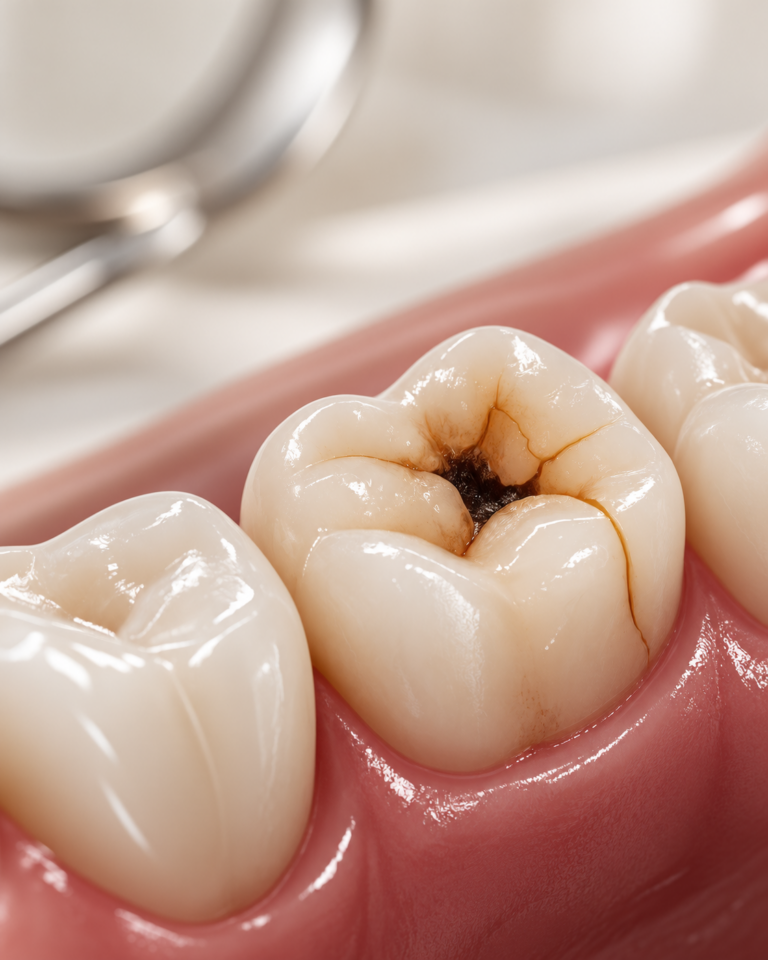
A broken tooth occurs when part of the tooth cracks, chips, or fractures. The damage may affect the outer enamel, the underlying dentin, or the inner pulp, which contains nerves and blood vessels.
The severity of a broken tooth can vary. For example, a small chip may affect only the enamel, while a deeper fracture may extend into the dentin or pulp.
A tooth can break because of several factors, including:
- Biting down on hard foods or objects.
- A fall, accident, or sports injury.
- Untreated tooth decay that weakens the tooth.
- Large fillings that leave less natural tooth structure.
- Teeth grinding or clenching.
- Sudden changes in pressure or force while chewing.
Because the damage may not always be visible, a dental examination can help determine how much of the tooth has fractured.
What Should You Do If You Break a Tooth?
If you break a tooth, take a few simple steps to protect it until you can see a dentist.
1. Rinse Your Mouth Gently
First, rinse your mouth with warm water to remove food particles and debris. Avoid vigorous rinsing if the area feels painful or sensitive.
2. Save Any Broken Tooth Pieces
If you can find the broken piece, gently rinse it with water and keep it in a clean container. Bring it to your dental appointment. In some cases, your dentist may be able to use the fragment during treatment.
3. Control Any Bleeding
If your gums or mouth bleed, apply gentle pressure with clean gauze. If bleeding does not stop or you have a significant injury, seek urgent medical or dental care.
4. Protect the Tooth
If the broken edge feels sharp, cover it temporarily with dental wax if available. Avoid touching the damaged area with your tongue or fingers.
5. Avoid Chewing on the Damaged Side
Choose soft foods and chew on the opposite side of your mouth. Additionally, avoid hard, crunchy, or sticky foods that could worsen the fracture.
6. Contact Your Dentist
Arrange a dental appointment as soon as possible. Even if the broken tooth does not hurt, a dentist can evaluate the damage and recommend appropriate treatment.
When Is a Broken Tooth a Dental Emergency?
Not every chipped tooth requires emergency treatment. However, some types of damage need prompt attention to protect the tooth and surrounding tissues.
Contact a dentist promptly if you experience:
- Severe or persistent tooth pain.
- Sensitivity to hot or cold that lingers.
- A large fracture or a break that exposes the inner tooth.
- Swelling around the tooth or gums.
- A broken tooth after an accident or injury.
- Bleeding that does not stop.
If you have facial swelling that affects breathing or swallowing, uncontrolled bleeding, or a serious facial injury, seek emergency medical care.
A dentist can assess the fracture and determine whether you need immediate treatment or a scheduled restorative appointment.
If you experience severe pain, swelling, or a significant fracture, seek prompt professional care. Learn more about emergency dentistry and urgent dental treatment at Summit Family & Cosmetic Dentistry.
What Are the Different Types of Broken Teeth?
Dentists classify tooth fractures based on their location and severity. Understanding the type of damage can help explain why your dentist recommends a particular treatment.
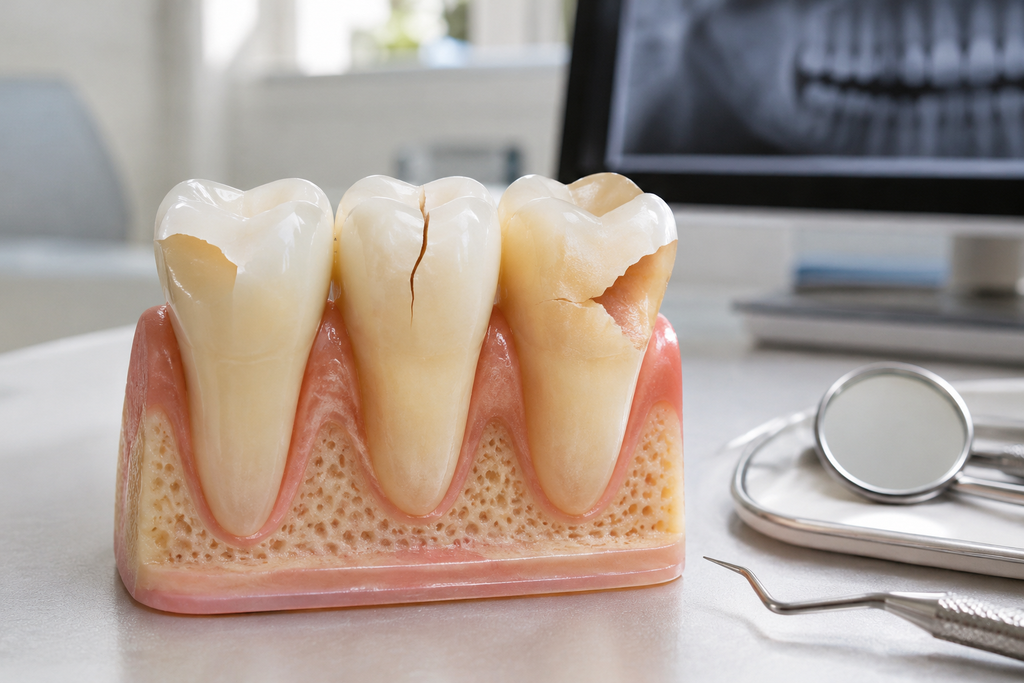
Chipped Tooth
A chipped tooth usually involves a small piece of enamel breaking away. Although a minor chip may not cause pain, it can leave a rough or sharp edge.
Your dentist may smooth the area or use dental bonding to restore the tooth’s shape.
Cracked Tooth
A cracked tooth has a fracture that may extend through the enamel and into the dentin. Some cracks cause discomfort when you bite or release pressure.
Because cracks can be difficult to see, your dentist may use an examination and diagnostic imaging to assess the tooth.
Broken Cusp
A broken cusp occurs when a pointed part of the tooth’s chewing surface fractures. This type of damage often affects a tooth with a large filling or weakened structure.
Your dentist may recommend a crown or another restoration to protect the remaining tooth.
Split Tooth
A split tooth has a fracture that separates the tooth into distinct segments. Depending on how far the fracture extends, the dentist may not be able to save the entire tooth.
Treatment may involve removing part of the tooth or extracting it if the damage is extensive.
Vertical Root Fracture
A vertical root fracture begins in the root and may extend toward the crown. These fractures can be difficult to detect and may cause symptoms such as gum swelling or discomfort.
Your dentist will evaluate the tooth carefully to determine whether treatment can preserve it.
How Do Dentists Treat a Broken Tooth?
The best treatment for a broken tooth depends on the size of the fracture, the location of the damage, and whether the inner pulp remains healthy.
Dental Bonding for a Chipped Tooth
For a small chip, your dentist may use tooth-colored composite resin to rebuild the damaged area. The dentist shapes and polishes the material so it blends with the surrounding tooth.
Dental bonding may restore the tooth’s appearance and function when the damage is limited.
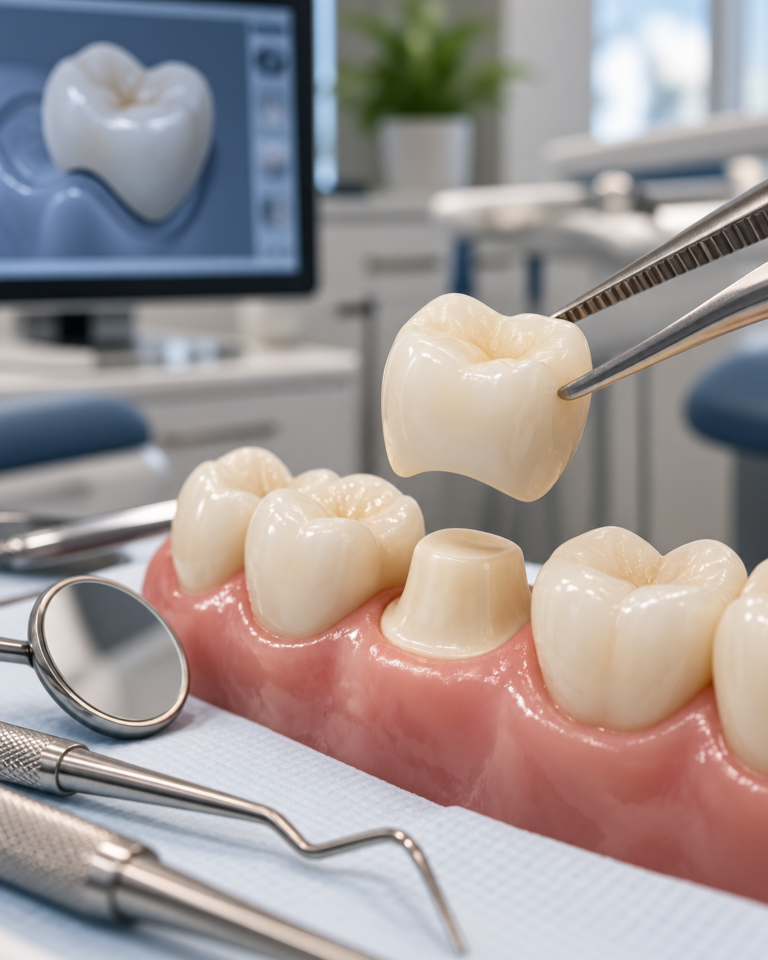
Dental Crown for a Broken Tooth
If a tooth has lost a significant amount of structure, your dentist may recommend a dental crown. A crown covers the remaining tooth and helps protect it from further damage.
Your dentist may recommend a crown when a fracture weakens the tooth or when a large filling leaves insufficient natural structure.
Root Canal Treatment for a Deep Fracture
If the fracture reaches the pulp and causes inflammation or infection, your dentist may recommend root canal treatment. During this procedure, the dentist removes the affected pulp, cleans the inside of the tooth, and seals it.
Afterward, the dentist may place a crown to protect the remaining tooth, depending on the amount of damage.
Tooth Extraction When the Damage Is Extensive
Sometimes, a fracture extends too far below the gumline or into the root to allow predictable restoration. In these cases, your dentist may recommend extraction.
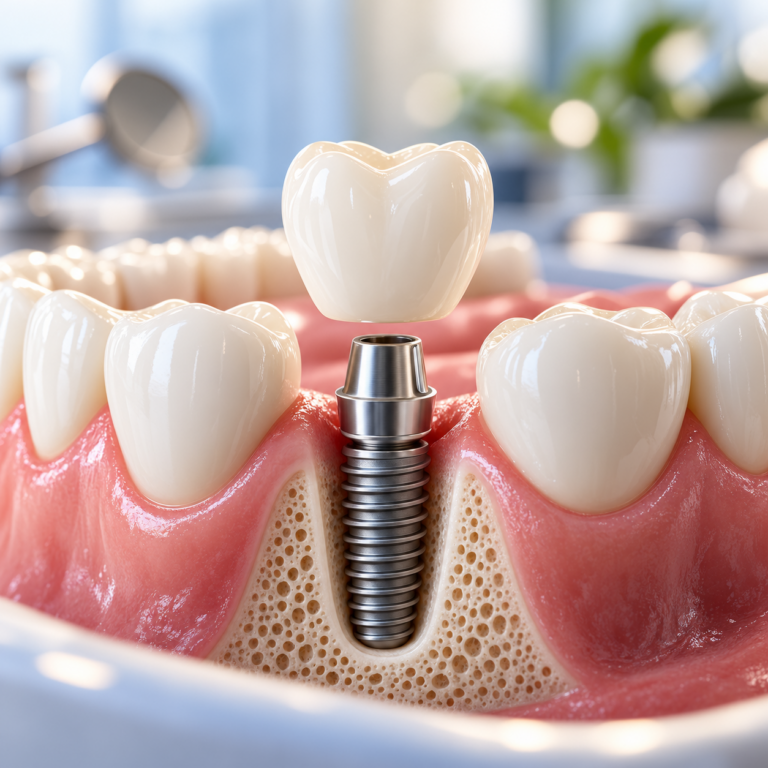
If the dentist removes the tooth, they can discuss replacement options such as a dental implant, bridge, or partial denture.
Can a Broken Tooth Heal on Its Own?
A broken tooth cannot grow back or repair lost enamel in the same way that some body tissues heal. However, a minor chip may not require extensive treatment.
Even so, a dentist should evaluate the damage because a small fracture can worsen over time. In addition, untreated cracks may allow bacteria to enter the tooth and cause further problems.
Prompt evaluation can help your dentist determine whether the tooth needs smoothing, bonding, a crown, or another treatment.
How Can You Prevent a Broken Tooth?
Although accidents can happen, you can reduce your risk of breaking a tooth by protecting your teeth during everyday activities.
- Avoid chewing hard objects: Do not bite ice, hard candy, pens, or other objects that can damage enamel.
- Wear a mouthguard during sports: A properly fitted mouthguard can help protect your teeth from impact.
- Address teeth grinding: If you clench or grind your teeth, ask your dentist whether a nightguard may help.
- Treat tooth decay promptly: Cavities can weaken the tooth and increase the risk of fractures.
- Maintain regular dental visits: Routine examinations can help identify weakened teeth before they fracture.
Additionally, avoid using your teeth to open packages or bite objects that are not food.
What Happens If You Leave a Broken Tooth Untreated?
Leaving a broken tooth untreated can allow the damage to worsen. For example, a crack may extend deeper into the tooth, making treatment more complicated.
A broken tooth may also cause:
- Increased sensitivity.
- Pain when chewing.
- Damage to the inner pulp.
- Infection or swelling.
- Further fracture or tooth loss.
However, symptoms do not always reflect the severity of the damage. A tooth may have a significant fracture even when it does not hurt.
For this reason, contact your dentist after breaking a tooth rather than waiting for symptoms to develop.
Frequently Asked Questions
Should I See a Dentist for a Small Chip?
Yes. Even a small chip can leave a sharp edge or expose a more vulnerable layer of the tooth. Your dentist can evaluate the damage and determine whether smoothing or bonding may help.
Is a Broken Tooth Always Painful?
No. A broken tooth may not cause pain, especially if the fracture affects only the enamel. However, deeper damage can cause sensitivity or discomfort. A dental examination can help identify the severity of the fracture.
Can a Dentist Fix a Broken Tooth in One Visit?
Some minor chips can be repaired with dental bonding during one appointment. However, a crown or more complex treatment may require multiple visits.
What Should I Eat With a Broken Tooth?
Choose soft foods that require minimal chewing. Avoid hard, crunchy, sticky, or very hot and cold foods if they trigger discomfort. Also, chew on the opposite side of your mouth until your dentist evaluates the tooth.
Can a Broken Tooth Cause an Infection?
Yes. If a fracture exposes the inner pulp, bacteria may enter the tooth and cause inflammation or infection. However, not every broken tooth develops an infection. Prompt dental evaluation can help determine whether the pulp needs treatment.
How Quickly Should I See a Dentist for a Broken Tooth?
Contact your dentist as soon as possible, especially if you have pain, sensitivity, swelling, or a large fracture. If you experience severe swelling, difficulty breathing or swallowing, or uncontrolled bleeding, seek emergency medical care.
Get Help for a Broken Tooth at Chatham Dental Arts
A broken tooth can be stressful, especially when it causes pain or affects your smile. Fortunately, prompt dental care can help protect the tooth and determine the most appropriate treatment.
At Chatham Dental Arts, you can discuss your symptoms and explore restorative options based on your needs. Whether you have a small chip or a more extensive fracture, a dental evaluation can help you understand the next steps.
Learn more about our dental and restorative services or contact the practice to discuss your dental concern.