Dental bridges offer a reliable way to replace one or more missing teeth and restore important functions like chewing and speaking. When you lose a tooth, the gap can affect more than the appearance of your smile. You may also notice changes in your bite, difficulty chewing certain foods, or discomfort when speaking. Over time, nearby teeth may shift toward the empty space, which can affect how your teeth fit together.
Fortunately, a dental bridge can fill that gap with an artificial tooth supported by natural teeth or dental implants. Depending on your oral health and the location of the missing teeth, your dentist may recommend a traditional bridge, a Maryland bridge, a cantilever bridge, or an implant-supported bridge.
Understanding the different types of dental bridges can help you make an informed decision about replacing missing teeth.
What Are Dental Bridges and How Do They Work?
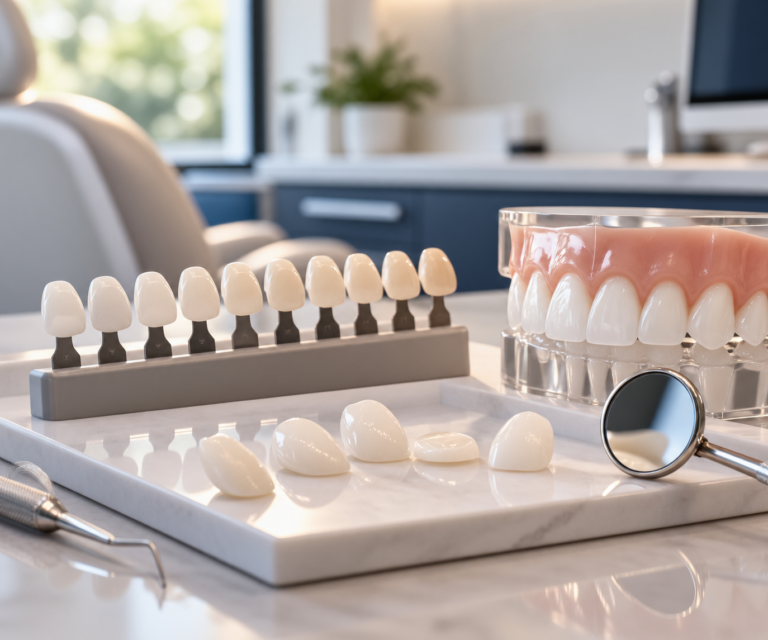
A dental bridge is a fixed restoration that replaces one or more missing teeth. It fills the gap with artificial teeth, also called pontics, and relies on nearby natural teeth or dental implants for support.
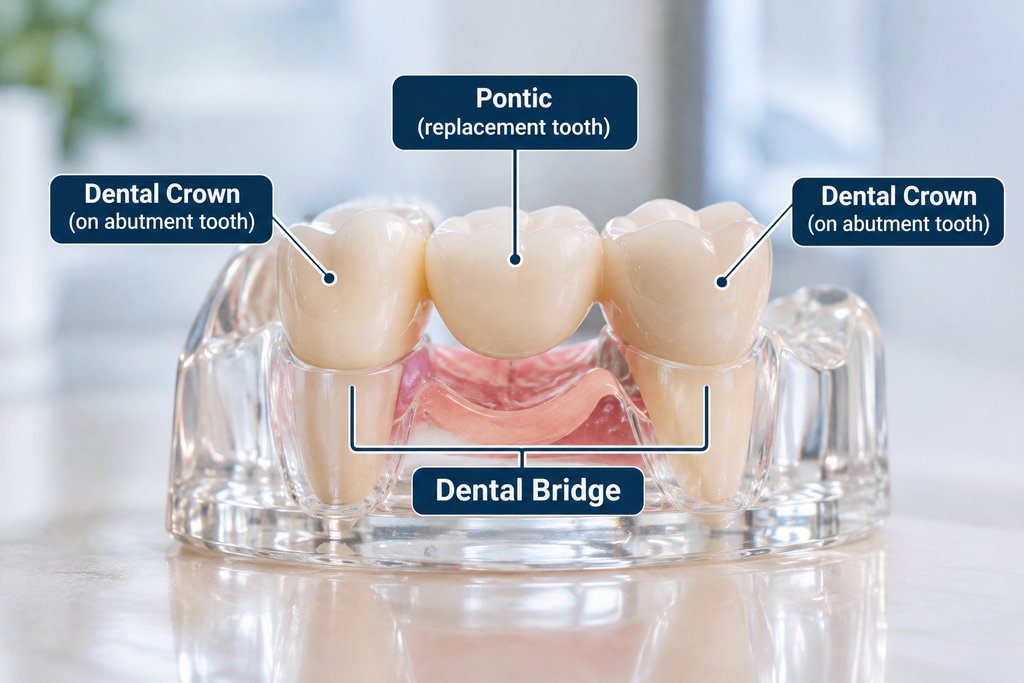
A traditional dental bridge typically includes:
- Abutment teeth: The natural teeth that support the bridge.
- Pontics: The artificial teeth that replace the missing teeth.
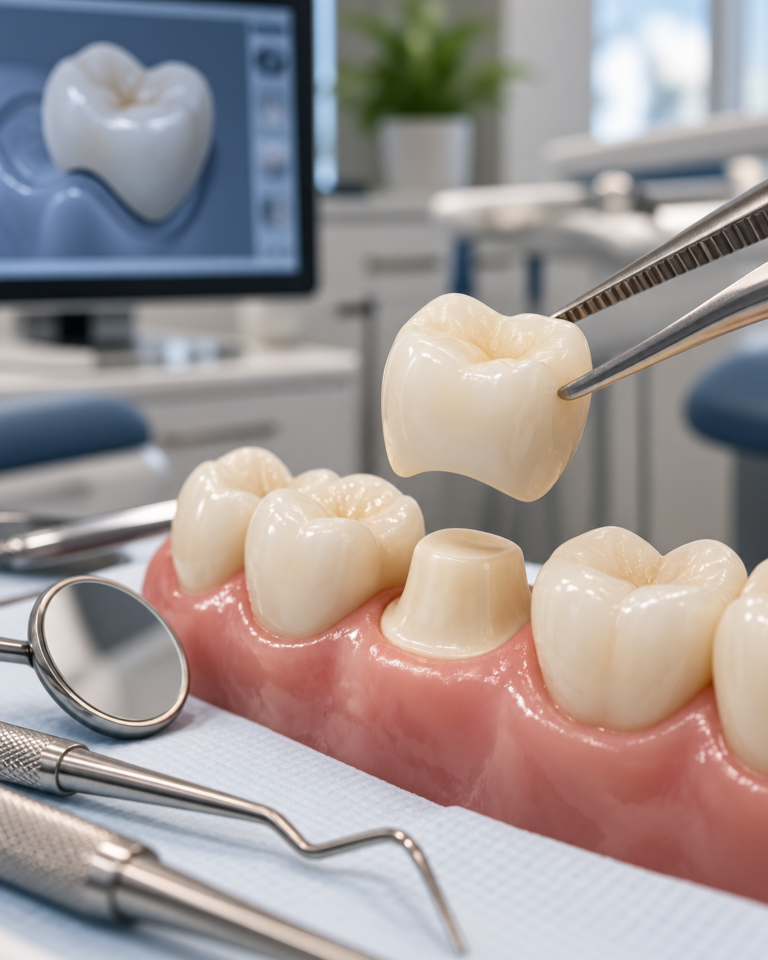
- Dental crowns: The coverings that hold the bridge in place over prepared supporting teeth.
Your dentist designs the bridge to fit your bite and complement the appearance of your natural teeth. As a result, a well-fitted bridge can restore chewing function while creating a natural-looking smile.
Why Do Dentists Recommend Dental Bridges?
When you lose a tooth, the gap can affect everyday activities and your overall dental health. For example, you may find it harder to chew comfortably or notice changes in your speech. Additionally, nearby teeth can gradually move toward the empty space.
A dental bridge may help address these concerns by filling the gap and restoring contact between your teeth.
Your dentist may recommend dental bridges if you:
- Have one or more missing teeth in a row.
- Prefer a fixed replacement instead of a removable partial denture.
- Have healthy teeth that can support a traditional bridge.
- Need to restore chewing function in an area with missing teeth.
- Want to improve the appearance of a gap in your smile.
However, not every missing tooth requires the same treatment. Your dentist will evaluate the gap, surrounding teeth, gums, and bite before recommending an appropriate option.
What Are the Different Types of Dental Bridges?
Dentists use several types of dental bridges, and each design offers a different way to support replacement teeth. Therefore, your dentist will consider the location of the missing teeth and the condition of the supporting structures before choosing a design.
1. Traditional Dental Bridges
A traditional dental bridge uses crowns on the natural teeth on both sides of the gap. These crowns support one or more artificial teeth between them.
Your dentist may recommend this option when you have strong, healthy supporting teeth on both sides of the missing tooth. However, the procedure requires reshaping those supporting teeth to make room for the crowns.
2. Cantilever Dental Bridges
A cantilever bridge uses one supporting tooth instead of two. The artificial tooth extends from the crown attached to that supporting tooth.
This design may suit certain situations where a natural tooth sits on only one side of the gap. However, it can place additional force on the supporting tooth. For this reason, your dentist must carefully evaluate your bite and determine whether this option is appropriate.
3. Maryland Dental Bridges
A Maryland bridge, also called a resin-bonded bridge, uses small wings attached to the back of nearby teeth. These wings hold the replacement tooth in place without requiring full crowns on the supporting teeth.
Dentists often consider this design for selected front-tooth replacements. Additionally, it may preserve more natural tooth structure than a traditional bridge. However, its suitability depends on your bite, the position of the missing tooth, and the condition of the supporting teeth.
4. Implant-Supported Dental Bridges
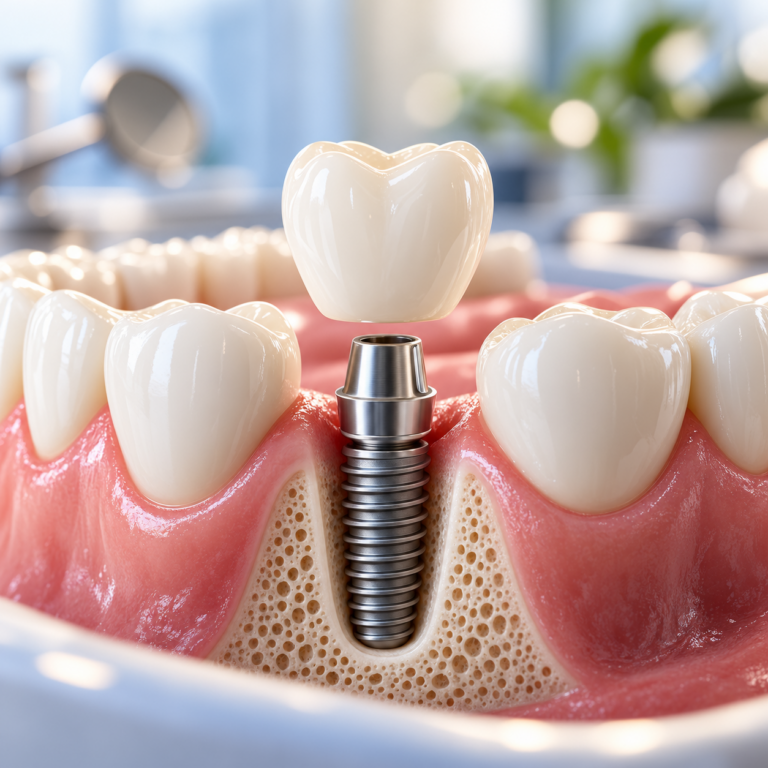
An implant-supported bridge uses dental implants instead of natural teeth for support. Your dentist places implants in the jawbone and attaches the bridge after the implants have healed sufficiently.
This option may help replace several missing teeth in a row without placing crowns on neighboring natural teeth. However, implant treatment requires sufficient bone support and careful planning. Your dentist will evaluate your bone health, gums, and overall treatment needs before recommending it.
What Are the Benefits of Dental Bridges?
Dental bridges can offer several benefits when they suit your oral health needs. In addition to filling gaps, they can help restore important everyday functions.
- Restores chewing function: A bridge helps fill the space left by missing teeth, allowing you to chew more comfortably.
- Supports speech: Replacing missing teeth may help address certain speech changes caused by gaps.
- Fills visible spaces: A custom-made bridge can blend with the appearance of your natural teeth.
- Helps maintain tooth alignment: Filling a gap can reduce the opportunity for nearby teeth to drift into the empty space.
- Provides a fixed replacement: Unlike a removable partial denture, a fixed bridge stays in place and requires professional removal.
Nevertheless, the benefits depend on the bridge design, the condition of the supporting teeth or implants, and how well you maintain your oral health.
Who Is a Good Candidate for Dental Bridges?
A dental bridge may work well for someone who has one or more missing teeth and enough healthy support for the planned restoration.
Before recommending treatment, your dentist will consider several factors, including:
- The number and location of missing teeth.
- The strength and condition of nearby teeth.
- The health of your gums.
- Your bite and chewing forces.
- Your oral hygiene habits.
- Whether dental implants may offer a better solution.
For a traditional bridge, the supporting teeth need enough strength to hold the restoration. If those teeth have decay or gum disease, your dentist may recommend treating these problems first. This helps create a healthier foundation for the bridge.
On the other hand, if the surrounding teeth cannot support a traditional bridge, an implant-supported option or another tooth replacement treatment may be more appropriate.
How Does the Dental Bridge Procedure Work?
The dental bridge procedure depends on the type of restoration your dentist recommends. A traditional bridge usually involves several stages, while Maryland and implant-supported bridges follow different preparation steps.
Step 1: Consultation and Examination
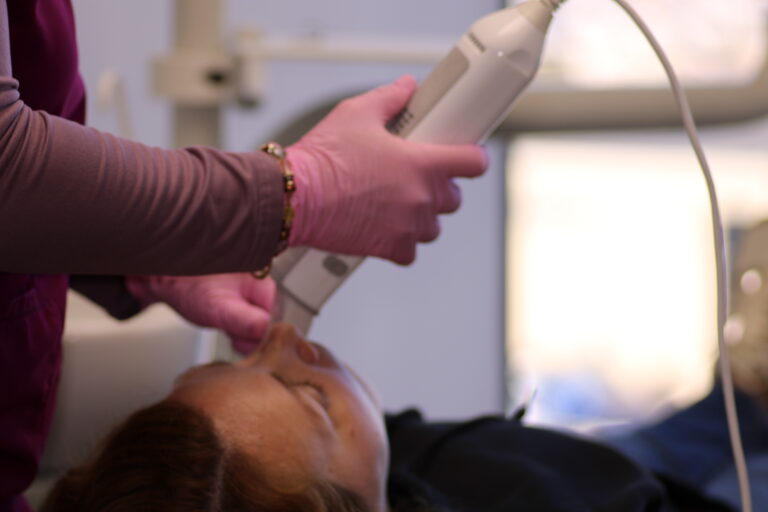
First, your dentist examines your teeth and gums, reviews your dental history, and discusses your concerns. Dental X-rays or other imaging may also help evaluate the supporting teeth and surrounding structures.
Based on these findings, your dentist determines whether a bridge can meet your needs.
Step 2: Preparing the Supporting Teeth
For a traditional bridge, your dentist reshapes the supporting teeth to make room for the crowns. Next, the dentist takes dental impressions or digital scans to help create a bridge that fits your mouth.
Maryland and implant-supported bridges require different preparation methods because they use different support systems.
Step 3: Creating and Fitting the Dental Bridge
A dental laboratory creates the custom restoration based on your dentist’s specifications. In the meantime, your dentist may place a temporary bridge to protect the prepared teeth.
At your next appointment, your dentist checks the final bridge’s fit, shape, appearance, and bite. Once everything looks and feels right, the dentist secures the restoration in place.
Step 4: Follow-Up and Adjustments
After placement, your dentist checks how the bridge feels and functions. You may need follow-up visits if certain areas feel uncomfortable or require minor adjustments.
Your dental team will also explain how to clean around and underneath your new bridge. With proper care, you can help protect the restoration and the supporting teeth.
How Long Do Dental Bridges Last?
A dental bridge can last many years, but its lifespan varies from person to person. The materials, bridge design, supporting teeth, bite forces, and daily care all affect how long it remains in good condition.
Fortunately, consistent oral hygiene can help protect your restoration. Brush twice daily, clean underneath the bridge, and avoid habits that place excessive force on your teeth. Additionally, attend regular dental visits so your dentist can monitor the bridge and surrounding tissues.
If your dentist notices signs of wear, damage, or changes in fit, they can discuss the next steps with you.
How Do You Care for Dental Bridges?
Dental bridges need consistent cleaning to protect the restoration and the teeth or implants that support them. Because food and plaque can collect underneath the artificial tooth, regular brushing alone may not clean every area.
Follow these habits:
- Brush twice daily: Use a soft-bristled toothbrush and fluoride toothpaste.
- Clean underneath the bridge: Use a floss threader, specialized bridge floss, or an interdental brush as your dentist recommends.
- Keep your gums healthy: Clean along the gumline and pay attention to the supporting teeth.
- Avoid excessive force: Do not chew ice or use your teeth to open packages.
- Attend regular checkups: Let your dentist monitor the bridge and surrounding tissues.
For best results, ask your dentist or hygienist to demonstrate how to clean underneath your specific bridge. That way, you can maintain the restoration and protect the surrounding teeth.
Dental Bridges vs. Dental Implants: What’s the Difference?
Dental bridges and dental implants can both replace missing teeth. However, they work in different ways.
A traditional bridge relies on nearby natural teeth for support. Your dentist usually needs to reshape those teeth to hold the crowns. In contrast, a dental implant replaces the missing tooth root with a post placed in the jawbone. The implant can then support a crown or bridge.
Your dentist may recommend a bridge when neighboring teeth can provide suitable support or when a fixed restoration fits your needs. Alternatively, implants may offer another option when you want to avoid preparing healthy neighboring teeth and have suitable bone and gum health.
For more information, explore this guide to dental implants and tooth replacement options. It explains how implant treatment can replace missing teeth and support different restorations.
Ultimately, neither option suits every patient. Your dentist can compare the benefits, limitations, treatment time, and maintenance needs of each approach.
Restore Your Smile With the Right Dental Bridge
A missing tooth does not have to keep you from enjoying everyday activities or feeling comfortable with your smile. Dental bridges can replace missing teeth, restore chewing function, and help maintain the appearance of your smile.
However, the right treatment depends on your oral health, the location of the gap, and the condition of your supporting teeth. At Chatham Dental Arts, you can discuss your concerns and explore personalized options through our dental and restorative services.
Frequently Asked Questions About Dental Bridges
Can Dental Bridges Replace More Than One Missing Tooth?
Yes. Dental bridges can replace one or several missing teeth in a row. Your dentist determines the appropriate design based on the size of the gap and the strength of the supporting teeth or implants.
Does Getting a Dental Bridge Hurt?
Your dentist typically uses local anesthesia when preparing natural teeth for a traditional bridge. You may experience some temporary sensitivity afterward. However, your dental team will explain what to expect and how to manage any discomfort.
Do Dentists Have to Shave Down Natural Teeth for Dental Bridges?
For a traditional bridge, your dentist reshapes the supporting teeth to make room for the crowns. Maryland bridges generally require less alteration, while implant-supported bridges use implants instead of crowns on neighboring natural teeth.
Can I Eat Normally With Dental Bridges?
Once you adjust to your bridge, you can generally return to many of your usual foods. However, your dentist may recommend avoiding very hard or sticky foods that could damage or loosen the restoration.
How Do I Clean Underneath a Dental Bridge?
Use a floss threader, bridge floss, or an interdental brush to clean beneath the artificial tooth. Your dentist or hygienist can demonstrate the technique that works best for your bridge.
Are Dental Bridges Better Than Dental Implants?
Neither treatment is automatically better for everyone. A bridge may suit patients with appropriate supporting teeth, while an implant may work well for patients with suitable bone and gum health. Therefore, your dentist can help compare both options based on your needs.