Dental Cleanings: More Than Just a Cleaner Smile
It’s a question we hear often, and it’s a fair one. Dental cleanings are an important part of preventive dental care, even when you brush and floss every day.
“If I brush and floss every day, why do I still need to get my teeth cleaned? ”
Good brushing and cleaning between your teeth are some of the most important things you can do for your oral health. But even a solid home-care routine can’t remove everything that can build up on your teeth.
That’s where professional dental cleanings come in.
A cleaning isn’t simply about making your teeth feel smooth or your smile look brighter. It’s part of preventive dental care that helps remove buildup you can’t effectively remove at home and gives your dental team an opportunity to pay attention to your gums and overall oral health.
The goal isn’t to replace what you do at home.
It’s to complement it.
If I Brush and Floss, Why Do I Still Need a Cleaning?
Think of your daily oral hygiene routine as the foundation.
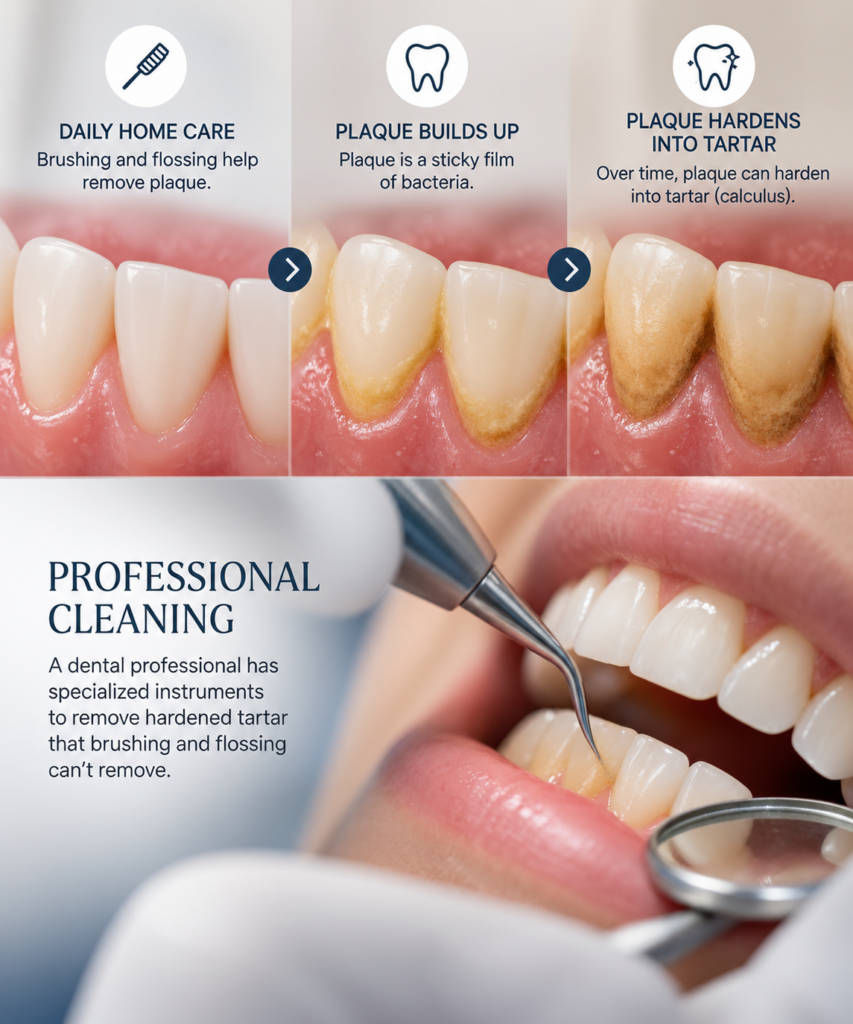
Brushing twice a day with fluoride toothpaste and cleaning between your teeth every day help remove plaque before it has a chance to cause problems. The ADA recommends these habits as part of everyday care for reducing the risk of cavities and gum disease.
But plaque doesn’t always stay soft.
When plaque remains on the teeth and accumulates minerals from saliva, it can harden into tartar, also called calculus. Once that happens, brushing and flossing can’t simply remove it.
A dental professional has the instruments needed to remove that hardened buildup.
So professional cleaning isn’t an indication that you’ve failed at brushing or flossing.
It’s one part of maintaining your oral health over time.
Dental Cleanings: What Your Toothbrush Can’t Remove
Plaque is a sticky film containing bacteria that constantly forms on your teeth.
You can remove much of it through regular brushing and cleaning between your teeth. But areas that are difficult to reach can be easy to miss.
If plaque stays in place long enough, it can harden into tartar.
And once tartar forms, you can’t simply brush it away.
That’s one reason professional cleanings are different from what you can accomplish at your bathroom sink. The cleaning removes hardened deposits that home care cannot, while your daily routine helps keep new plaque from accumulating between visits.
It’s really a partnership:
Your daily care maintains your mouth.
Professional cleanings help us address buildup that home care can’t remove.
Dental Cleanings: What Happens During a Professional Dental Cleaning?
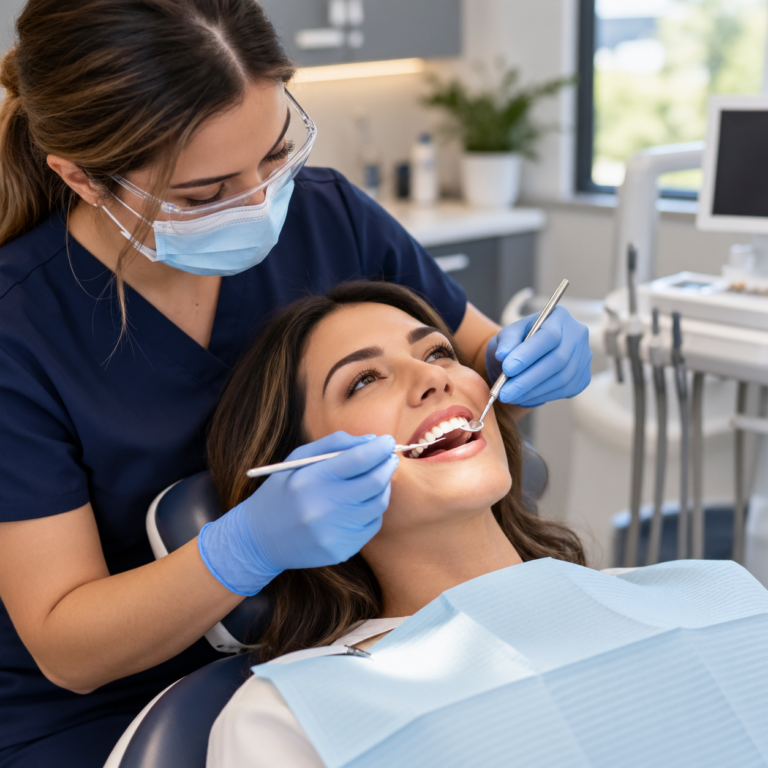
A routine dental cleaning is generally straightforward.
Depending on your needs, a dental professional may remove plaque and tartar, clean around the gumline, polish your teeth, and guide you on maintaining oral hygiene at home. Professional preventive care may also include other services based on your oral health needs. Learn more about preventive dental care and professional cleanings from Summit Family & Cosmetic Dentistry.
But a cleaning appointment isn’t necessarily just about the cleaning itself.
Your dental team may also pay attention to the condition of your gums and other areas of your mouth. If something appears different or needs additional evaluation, that can be brought to the dentist’s attention.
That distinction matters.
A cleaning and a dental examination are related parts of preventive care, but they aren’t the same thing. A cleaning focuses on removing buildup, while an examination evaluates your oral health more broadly.
That’s why regular preventive visits often involve both.
Dental Cleanings Are Also an Opportunity to Look at Your Gum Health
Your gums can tell us quite a bit about what’s happening in your mouth.
Healthy gums generally don’t remain swollen, tender, or prone to bleeding. Persistent bleeding, redness, swelling, recession, or other changes can be signs that your gums need closer attention.
Gingivitis, the early stage of gum disease associated with plaque buildup, can often be prevented and reversed with effective daily plaque removal. But if gum disease progresses, treatment can become more involved.
This is one reason we don’t want to think about dental cleanings as simply a cosmetic service.
Keeping the teeth clean also supports the health of the tissues around them.
Not Every Cleaning Is the Same
This is an important distinction.
A routine professional cleaning is not the same thing as scaling and root planing, sometimes called a deep cleaning.
A routine cleaning is generally part of preventive care for maintaining oral health.
Scaling and root planing is a periodontal treatment used when gum disease requires treatment below the gum line. The appropriate treatment depends on the condition of the gums and supporting tissues and the individual patient’s needs.
So if someone tells you they had a “deep cleaning,” that doesn’t necessarily mean it’s simply a more thorough version of a routine cleaning.
They’re different types of care for different clinical situations.
If additional periodontal treatment is recommended, your dental team should explain what was found and why that particular treatment is appropriate.
How Often Should You Have Your Teeth Cleaned?
You may have heard the general rule that everyone needs a cleaning every six months.
In reality, there isn’t one schedule that is right for every person.
Your recommended interval can depend on your oral health, gum health, history of dental disease, risk factors, and other individual circumstances.
The CDC recommends regular dental checkups and professional cleanings, with additional visits when recommended by a healthcare provider.
Someone with a history of periodontal disease, for example, may need a different maintenance schedule than someone with a lower risk profile.
That’s why we prefer to look at the person rather than simply the calendar.
The right question isn’t necessarily:
“Do I need a cleaning every six months? ”
It’s:
“How often should I have my teeth and gums professionally evaluated and cleaned based on my needs? ”
What You Do Between Cleanings Matters Just as Much
A professional cleaning can’t replace what happens at home.
In fact, your daily habits have a much bigger role in keeping plaque under control between dental visits.
The ADA recommends brushing twice a day with fluoride toothpaste and cleaning between your teeth daily. The specific tools and techniques can be tailored to your needs.
For example, some patients may find that traditional floss works well, while others may benefit from interdental brushes or a water flosser depending on the spaces between their teeth and their individual circumstances. The ADA notes that the choice of interdental cleaner can be personalized to the patient.
There’s no prize for using the most complicated routine.
The best routine is one you can perform consistently and effectively. If you’re looking for more guidance on maintaining your oral health between visits, our Oral Health 101 guide covers some of the fundamentals of preventive care.
What If Your Gums Bleed During a Cleaning?
A little sensitivity during cleaning can happen, particularly if there is significant buildup or if your gums are already inflamed.
But regular or persistent gum bleeding shouldn’t simply be dismissed as “normal.”
Bleeding, swollen, or tender gums can be signs of gingivitis or other periodontal concerns and are worth discussing with your dental team.
If your gums bleed when you brush or clean between your teeth, let us know.
It gives us useful information about what’s happening and whether your home-care routine or professional care needs to be adjusted.
The Goal Isn’t Just Clean Teeth
There’s something satisfying about leaving a dental appointment with that clean, smooth feeling.
But that’s not really the whole point.
The bigger goal of preventive dental care is to help you maintain healthy teeth and gums over time.
That means looking at what’s happening now, understanding your individual risk factors, and giving you practical information you can use between visits.
At Chatham Dental Arts, we believe preventive care should be personalized. Our team combines professional cleanings with comprehensive examinations, patient education, and modern technology when appropriate to create care around the individual—not a one-size-fits-all schedule. The practice also provides routine cleanings alongside more complex dental care under one roof.
A professional cleaning is one appointment.
The habits and information you take away from it can benefit you every day afterward.
A Clean, Healthy Mouth Starts With Both Sides of the Equation
Your toothbrush and your dental team aren’t competing with each other.
They’re working toward the same goal.
Daily brushing and cleaning between your teeth help control plaque at home. Professional cleanings remove hardened buildup that can’t be removed with a toothbrush or floss alone. Regular dental evaluations also give your care team an opportunity to monitor your oral health and make recommendations based on what they see.
At Chatham Dental Arts, our goal is to make preventive care straightforward, comfortable, and useful—not simply another appointment on your calendar.
Because the best dental care isn’t always about fixing a problem.
Sometimes, it’s about helping you keep a healthy smile in the first place.
Frequently Asked Questions:
How often should I get a dental cleaning?
There isn’t one schedule that applies to everyone. Your recommended cleaning interval depends on factors such as your oral health, gum health, history, risk factors, and treatment needs. Your dental professional can recommend the interval that makes sense for you.
Is a dental cleaning the same as a dental exam?
No. A cleaning focuses on removing plaque and tartar, while a dental examination evaluates your teeth, gums, and overall oral health. Both can play an important role in preventive care.
Can I remove tartar at home?
No. Brushing and cleaning between your teeth can help prevent plaque from accumulating and hardening, but once tartar has formed, it needs to be removed by a dental professional.
Does a dental cleaning hurt?
Many routine cleanings are well tolerated, but some people may experience temporary sensitivity, particularly when there is significant buildup or gum inflammation. Let your dental team know if you’re uncomfortable so they can adjust the approach when possible.
What is the difference between a regular cleaning and a deep cleaning?
A routine cleaning is generally preventive care. A deep cleaning, or scaling and root planing, is a periodontal treatment used when gum disease requires treatment below the gum line. Your dentist or dental hygienist can determine what type of care is appropriate based on your individual condition.
Can dental cleanings prevent gum disease?
Professional cleanings can help remove tartar and support gum health, but they are only one part of prevention. Daily brushing and cleaning between your teeth are also essential for controlling plaque.
Should I still get my teeth cleaned if I have no pain?
Yes. The absence of pain doesn’t necessarily mean there are no oral health concerns. Regular professional care can help maintain oral health and allow dental professionals to identify changes that may need attention.