

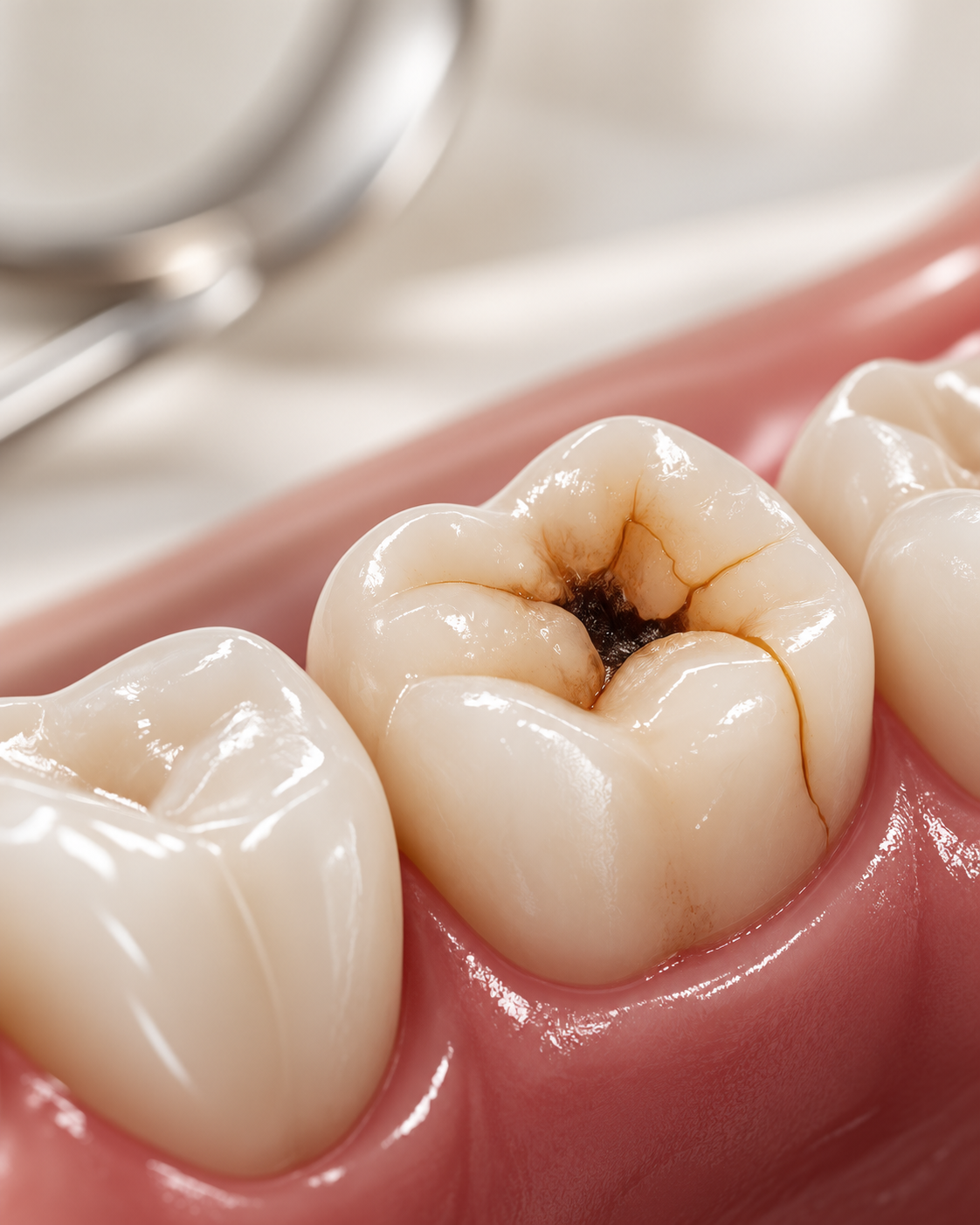
Severe Toothache: When Is Tooth Pain a Dental Emergency?
A severe toothache can make it difficult to sleep, eat, work, or focus on anything else. When the pain becomes intense, one of the first questions many people have is whether they should wait for it to pass or seek urgent dental care.
A severe toothache usually signals that a dentist should evaluate the problem. The cause may be tooth decay, inflammation inside the tooth, an infection, a crack, damage to an existing restoration, or a problem affecting the surrounding gums.
Not every severe toothache requires the same treatment, and the intensity of the pain alone cannot determine the cause. Understanding the warning signs can help you know when it is time to contact a dentist and when symptoms require emergency medical attention.
At Chatham Dental Arts, our approach to a severe toothache begins with identifying what is causing the pain and helping patients understand their treatment options.
Severe Toothache: When Should You Be Concerned?
A severe toothache deserves attention when the pain is persistent, worsening, or interfering with normal activities.
You should contact a dentist promptly if your severe toothache is accompanied by:
- Swelling around the tooth, gums, cheek, or jaw
- Pain when biting or chewing
- A persistent bad taste or foul-smelling drainage
- Fever or feeling generally unwell
- Significant sensitivity to hot or cold
- A broken or cracked tooth
- A loose tooth
- Pain that continues despite appropriate pain relief
- Pain that repeatedly wakes you during the night
You do not necessarily need to wait until a toothache becomes unbearable before seeking care. Addressing a problem early can make treatment simpler and more manageable.
What Can Cause a Severe Toothache?
A severe toothache is a symptom rather than a diagnosis. Several different dental conditions can produce significant pain.
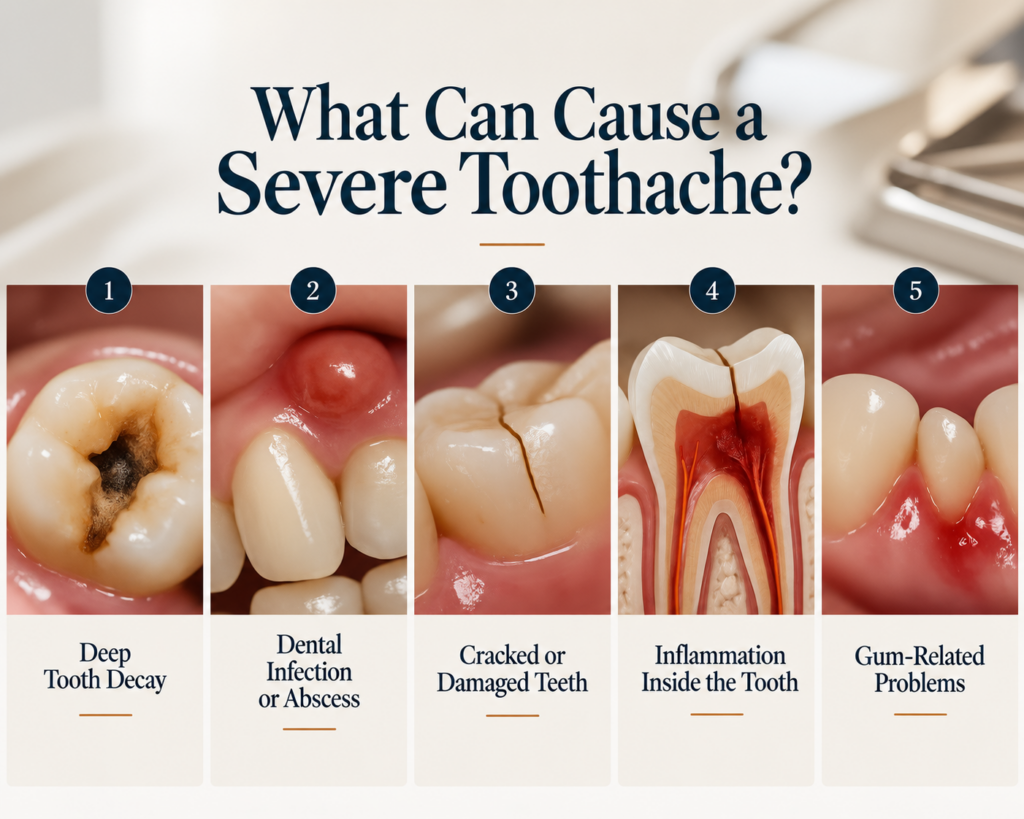
Deep Tooth Decay
Tooth decay may not cause noticeable symptoms during its early stages. As decay progresses deeper into the tooth, however, sensitivity and pain can develop.
If decay reaches the pulp—the inner portion of the tooth containing nerves and blood vessels—the tooth can become significantly inflamed or infected. At this stage, a severe toothache may develop and require more than a simple filling.
Dental Infection or Abscess
A dental infection can develop inside a tooth or around its root.
A dental abscess may cause a severe toothache along with tenderness, swelling, pain when biting, drainage, a bad taste, or fever. Even if an abscess drains and the pain temporarily improves, the underlying infection may still require treatment.
Cracked or Damaged Teeth
A crack can cause a severe toothache or intermittent pain that is difficult to locate.
Some people experience pain when biting down, while others notice discomfort when releasing their bite or when consuming hot or cold foods and drinks.
Your dentist will consider the crack’s location and extent, as well as the amount of remaining healthy tooth structure, when planning treatment.
Inflammation Inside the Tooth
The pulp contains the nerves and blood vessels inside a tooth. When this tissue becomes significantly inflamed, it can produce intense or persistent pain.
A severe toothache caused by inflammation inside the tooth may occur spontaneously rather than only when eating or drinking something hot or cold.
Depending on the condition of the tooth, treatment may include root canal therapy or another restorative procedure.
Gum-Related Problems
Not every severe toothache originates inside the tooth.
Inflamed or infected gum tissue can also cause localized pain, swelling, bleeding, or tenderness. An examination helps determine whether the source of the discomfort is the tooth, the surrounding tissues, or both.
How Do You Know If a Severe Toothache Needs Urgent Dental Care?
If you are experiencing intense tooth pain, especially if it persists or worsens, and whether you have other symptoms.
A severe toothache that interferes with sleep, eating, work, or daily activities is a good reason to contact a dentist.
The same applies when pain continues or repeatedly returns.
The type of pain can also provide useful information. Brief sensitivity to cold may have a different cause from spontaneous, lingering pain. Pain when chewing can point toward another type of dental problem.
These differences matter because the appropriate treatment depends on the underlying cause of the severe toothache.
Severe tooth pain can sometimes require prompt evaluation. For additional information about recognizing and responding to dental emergencies, see this guide to emergency dental care from Summit Family & Cosmetic Dentistry.
Warning Signs That Can Accompany a Severe Toothache
Certain symptoms can make a severe toothache more concerning and signal that you should see a dentist promptly.
Swelling
Inflammation around a painful tooth can occur with a dental infection. When swelling begins to spread through the face or jaw, prompt dental evaluation is important.
Fever or Feeling Unwell
A fever or a general feeling of un-wellness, along with a severe toothache, can indicate that an infection is affecting more than just the tooth.
Foul Taste or Drainage
A sudden bad or salty taste near a painful tooth can occur when infected material drains from an abscess.
Even if drainage causes the toothache to temporarily improve, the underlying problem may remain.
Pain When Biting
A severe toothache that becomes worse when biting or chewing can occur with several dental conditions, including inflammation around the root or damage to the tooth.
Severe Pain at Night
A severe toothache that keeps you awake or repeatedly interrupts your sleep should not simply be managed indefinitely with pain medication.
Persistent nighttime dental pain deserves an evaluation to determine what is causing it.
When a Severe Toothache Becomes a Medical Emergency
Most cases of severe toothache should be evaluated by a dentist. There is an important exception when swelling or infection begins to affect essential functions such as breathing or swallowing.
If swelling in your mouth, face, or neck makes it difficult to breathe or swallow, seek emergency medical care immediately.
Significant swelling involving the neck or areas around the eye can also require urgent medical evaluation.
These symptoms can indicate that an infection has spread into deeper tissues and may threaten the airway.
In this situation, do not wait for a routine dental appointment. A hospital emergency department can address the immediate medical concern. Definitive dental treatment may still be necessary afterward to address the source of the infection.
What Can You Do for a Severe Toothache While Waiting to See a Dentist?
If you have significant tooth pain and are waiting for an urgent dental appointment, several steps may help you stay more comfortable.
Follow the directions on any over-the-counter medication you take. If you are unsure whether a medication is appropriate for you, speak with a healthcare professional or pharmacist.
Current American Dental Association guidance supports non-opioid pain medications such as NSAIDs, including ibuprofen or naproxen, alone or combined with acetaminophen, for many cases of acute dental pain when definitive dental treatment is not immediately available. Individual medical circumstances can affect which medications are appropriate.
You can also:
- Rinse gently with warm salt water.
- Choose softer foods temporarily.
- Avoid chewing on the painful side.
- Avoid foods or drinks that trigger your toothache.
- Continue gentle brushing and cleaning between your teeth.
- Contact a dental office rather than repeatedly postponing evaluation.
Do not place aspirin directly against the tooth or gums. It can irritate or damage the surrounding tissue.
It is also important not to assume that antibiotics are automatically necessary for a severe toothache. Antibiotics are not appropriate for every type of dental pain or localized dental infection. When indicated, they are generally used alongside treatment that addresses the source of the infection.
Why Severe Toothache Pain Can Temporarily Improve
One of the most misleading aspects of severe tooth pain is that the discomfort may sometimes decrease even when the underlying problem remains.
A tooth can hurt intensely and then become less painful. That change does not necessarily mean the tooth has healed.
For example, an infection may continue to develop even if symptoms temporarily change. A cracked tooth can also continue to deteriorate even when it is not painful at a particular moment.
This is why pain that improves but keeps returning still deserves a dental evaluation.
The goal is not simply to make the tooth stop hurting. The goal is to determine why it hurts and whether treatment is needed to protect the tooth and surrounding oral tissues.
What Happens During an Emergency Dental Visit for a Severe Toothache?
An emergency dental evaluation for a severe toothache typically begins with understanding your symptoms and examining the affected area.
Your dentist may ask:
- When did the toothache begin?
- Did the pain start suddenly or gradually?
- Is the pain constant or intermittent?
- What makes the pain worse?
- Does hot or cold trigger it?
- Does biting cause pain?
- Have you noticed swelling?
- Have you noticed drainage or a bad taste?
- Have you had an injury to the tooth?
- What have you taken for the pain?
The tooth and surrounding tissues are then examined.
Depending on what is found, dental imaging may be recommended to evaluate areas that cannot be fully assessed through a visual examination alone.
The purpose of the evaluation is to identify the source of the severe toothache and determine which treatment options may be appropriate.
At Chatham Dental Arts, modern diagnostic technology can be used when appropriate to support a careful evaluation and individualized treatment planning. A dental examination helps identify the source of a severe toothache and determine whether additional imaging or treatment is appropriate. Learn more about what to expect during a comprehensive dental exam.
What Treatments Can Relieve a Severe Toothache?
Treatment for significant tooth pain depends on its underlying cause.
A tooth affected by decay may need a filling or another restoration.
A damaged or weakened tooth may require a crown or other restorative treatment.
Depending on the cause, treatment may involve restorative care such as fillings, crowns, or other procedures. You can learn more about the dental services available at Chatham Dental Arts.
If the pulp inside a tooth is irreversibly inflamed or infected and the tooth can be preserved, root canal treatment may be considered.
If an infection has resulted in an abscess, treatment may involve drainage and treatment of the affected tooth. Antibiotics may be appropriate in certain situations, particularly when there are signs of systemic involvement.
If a tooth is too severely damaged to restore predictably, extraction may sometimes be recommended.
Importantly, a severe toothache does not automatically mean that the tooth needs to be removed.
The appropriate treatment depends on the condition of the tooth, the surrounding tissues, and the overall clinical findings.
How Can You Reduce the Risk of Another Severe Toothache?
Not every severe toothache can be prevented. A sudden injury, unexpected fracture, or other dental problem can occur even when you take good care of your teeth.
Preventive dental care can, however, help identify developing problems before they become urgent.
Routine dental examinations give your dentist an opportunity to look for signs of tooth decay, gum disease, cracks, failing restorations, and other changes that may not be obvious at home.
Daily oral hygiene is also important. Brushing with fluoride toothpaste, cleaning between the teeth, maintaining a balanced diet, and following a personalized preventive-care plan can help support long-term oral health.
If a tooth has become sensitive, fractured, painful, or noticeably different from the rest of your teeth, mention it during your dental visit rather than waiting for the discomfort to develop into a severe toothache.
When Should You Call a Dentist About a Severe Toothache?
You do not need to diagnose the problem yourself.
If you have a severe toothache, particularly one that is persistent, worsening, interfering with sleep, or accompanied by swelling, fever, drainage, or pain when biting, contacting a dentist is an appropriate next step.
The sooner the source of the toothache is identified, the sooner you can understand what treatment options are available.
If you develop significant swelling involving the mouth, face, or neck that makes breathing or swallowing difficult, seek emergency medical care immediately.
At Chatham Dental Arts, urgent dental care begins with listening to what you are experiencing, evaluating the underlying cause, and explaining your options clearly. The goal is not simply to get you through a painful day. It is to help you understand what is happening and make an informed decision about your oral health.
A severe toothache is something you should not have to simply endure. An appropriate dental evaluation can help determine what is causing the pain and what should happen next.
Frequently Asked Questions
Is a severe toothache considered a dental emergency?
A severe toothache can require urgent dental care, particularly when the pain is persistent, worsening, interferes with sleep or daily activities, or occurs with swelling, fever, drainage, or pain when biting.
A dentist can evaluate the symptoms and determine how urgently the problem needs to be addressed.
Can a severe toothache go away on its own?
A severe toothache can temporarily improve even when the underlying dental problem remains.
A reduction in pain does not necessarily mean that decay, infection, inflammation, or structural damage has resolved. Persistent or recurring tooth pain should be evaluated.
Should I go to the emergency room for a severe toothache?
Most cases of severe toothache are best evaluated by a dentist.
However, seek emergency medical care if swelling associated with a toothache is making it difficult to breathe or swallow, or if significant swelling is affecting areas such as the neck or around the eye.
What causes a severe toothache?
A severe toothache can result from deep tooth decay, inflammation or infection inside the tooth, a dental abscess, a cracked or damaged tooth, problems with an existing restoration, or gum-related conditions.
An examination is necessary to determine the specific cause.
What can I take for a severe toothache?
For many adults and adolescents, non-opioid pain medications such as NSAIDs and/or acetaminophen can help manage acute dental pain when professional dental care is not immediately available. The appropriate medication depends on individual health circumstances, medications, allergies, age, and other factors.
Follow product directions and ask a healthcare professional or pharmacist if you are unsure what is appropriate for you.
Does a severe toothache always mean I need a root canal?
No. A severe toothache can have many different causes, and not every painful tooth requires root canal treatment.
Depending on the diagnosis, treatment could include a filling, crown, root canal treatment, drainage, or extraction.
Can antibiotics cure a severe toothache?
Antibiotics are not a treatment for every type of severe toothache.
When a dental infection is present, treatment generally needs to address the source of the problem. Antibiotics may be appropriate in certain circumstances, particularly when systemic signs such as fever or malaise are present.
How quickly should I see a dentist for a severe toothache?
If you have a severe toothache, contact a dental office promptly rather than waiting for the pain to become unbearable.
The urgency depends on the symptoms. Severe pain accompanied by swelling, fever, drainage, or worsening symptoms warrants particular attention. Difficulty breathing or swallowing requires emergency medical care.