Dental Crowns: What to Know Before Treatment
Dental crowns are custom restorations designed to protect and restore teeth that have been significantly damaged, weakened, worn, or affected by decay. But a crown isn’t automatically the right solution for every damaged tooth. Understanding why a crown may be recommended—and what alternatives may be available—can help you make a more informed decision about your dental care.
“Why do I need a crown? Can’t we just put in a filling?”
It’s a question patients often have—and it’s a good one.
A dental crown isn’t simply a larger filling. It is a custom restoration designed to cover and protect a tooth when the tooth has lost enough structure that a simpler restoration may not provide the support it needs.
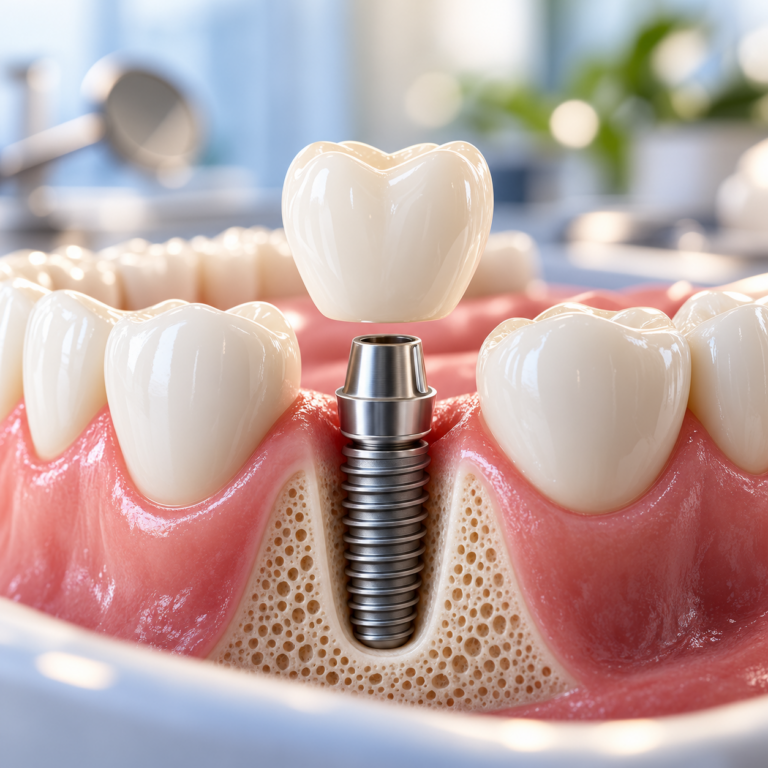
Dental crowns can be used to restore teeth that are significantly damaged, weakened, worn, or affected by decay. They can also be used after certain root canal treatments or to restore a dental implant.
But recommending a crown shouldn’t be about automatically choosing the biggest restoration available.
The important question is:
What does this particular tooth need to remain healthy, functional, and comfortable for as long as possible?
That answer depends on the amount of healthy tooth structure remaining, the location of the tooth, how much force it experiences, your bite, and your overall oral health.
What Are Dental Crowns?
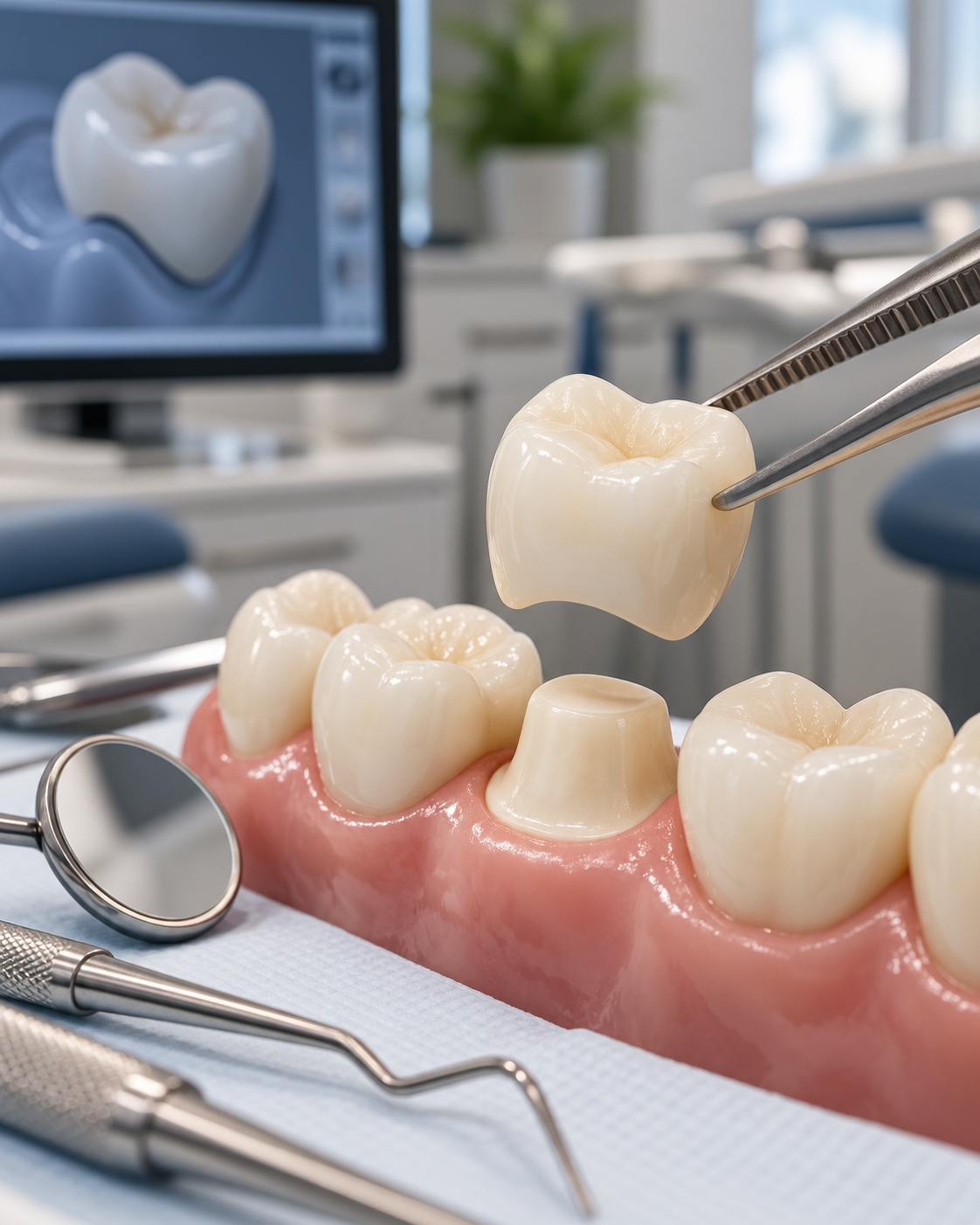
Dental crowns are custom-made restorations that fit over a prepared tooth, creating a new outer surface around it.
You may also hear a crown called a “cap.” The two terms refer to the same type of restoration.
The purpose of a crown can be both functional and restorative. It can help protect a weakened tooth, restore its shape, improve chewing function, and in some cases improve its appearance.
The American Dental Association notes that crowns may be used to strengthen a tooth with a large filling, protect a weak or broken tooth, restore a damaged tooth, support a bridge, or cover a dental implant. MouthHealthy
In other words, a crown isn’t just about making a tooth look better.
The goal is to restore a tooth that needs more support.
When Might Dental Crowns Be Recommended?
No single tooth type or problem automatically means you need a crown. Before recommending a crown, a comprehensive dental exam helps us evaluate the tooth, surrounding gums, and overall oral health
A crown may be considered when a tooth has experienced substantial structural damage, such as:
- A large area of decay
- A significant fracture or crack
- A large existing filling with limited healthy tooth structure remaining
- Extensive wear
- A tooth that has broken down over time
- A tooth that has undergone root canal treatment
- A tooth being restored over a dental implant
Crowns can also be used in certain situations where the appearance and shape of a tooth need to be restored along with its function.
The key consideration is not simply how damaged the tooth looks.
It’s how much healthy tooth structure remains and whether that structure can reliably support the restoration.
Crown or Filling? The Difference Comes Down to How Much Tooth Remains
A filling and a crown serve different purposes.
A filling is generally used to repair a more limited area of tooth damage, such as a cavity. The dentist removes the damaged portion and fills the space with restorative material. NIDCR
A crown is different.
Instead of filling one area of the tooth, a crown covers the tooth after it has been prepared.
This can provide additional support when a tooth has lost a substantial amount of its natural structure.
Think of it this way:
A filling repairs a damaged area. A crown restores and protects a tooth that needs more extensive support.
There are also situations where neither is the best choice. An inlay or onlay, for example, may be appropriate when a tooth has more damage than a filling can predictably restore but still has enough healthy structure that a full crown may not be necessary. Cleveland Clinic
That’s why the treatment decision should be based on the individual tooth rather than simply choosing between “filling” and “crown.”
A Crown Shouldn’t Be the First Answer to Every Problem
One of the most important parts of restorative dentistry is knowing when not to do more treatment than necessary.
Every restoration requires some alteration of the tooth. With a crown, some natural enamel must be removed to create room for the restoration and establish the shape needed for proper fit. Cleveland Clinic
Because natural tooth structure matters, the goal should be to preserve healthy structure whenever clinically appropriate.
Depending on the situation, treatment may involve:
- Monitoring the tooth
- A filling
- An inlay or onlay
- A crown
- Root canal treatment followed by restoration
- Another restorative approach
The right option depends on what is happening inside and around the tooth—not just what is visible when you smile.
What Are Dental Crowns Made From?
Dental crowns are available in several materials, and there isn’t one material that is automatically best for every patient.
The choice can depend on the location of the tooth, biting forces, appearance, available space, your oral health, and the clinical goals of the restoration.
Ceramic and Porcelain Crowns
Ceramic and porcelain-based crowns can provide a natural-looking appearance because they can be designed to mimic characteristics of natural tooth enamel.
They are often considered when appearance is an important part of the treatment.
Zirconia Crowns
Zirconia is a ceramic material known for its strength and durability. Modern zirconia restorations can also be designed with an appearance appropriate for visible teeth.
Porcelain-Fused-to-Metal Crowns
These restorations combine a metal structure with a porcelain outer layer.
They have been used extensively in dentistry and can provide both strength and an enamel-like appearance, although the porcelain layer can chip over time. Cleveland Clinic
Metal Crowns
Metal crowns can provide excellent durability and may be useful for certain teeth, particularly where appearance is less important and chewing forces are high.
The American College of Prosthodontists notes that crowns may be made from all-metal, porcelain-fused-to-metal, or all-ceramic materials.
The important point is that material selection should be individualized.
What Happens During Dental Crowns Treatment?
The exact process varies by tooth, crown type, and condition being treated. Digital technology has also made certain crown treatments more efficient. For a closer look at this approach, read Summit Family & Cosmetic Dentistry’s guide to same-day dental crowns.
In a traditional crown procedure, treatment generally involves several steps.
1. Evaluation and Treatment Planning
First, the tooth needs to be evaluated.
Your dentist may examine the tooth, surrounding gums, bite, existing restoration, and other factors that could affect the success of treatment.
Imaging may also be appropriate depending on the situation.
This is where treatment planning matters. Before preparing a tooth for a crown, the dentist needs to determine whether a crown is actually the right restoration.
2. Preparing the Tooth
If a crown is appropriate, the tooth is carefully prepared to create enough space for the restoration.
Some natural tooth structure must be removed so the crown can fit properly without making the tooth unnecessarily bulky. Cleveland Clinic
The goal is not simply to make the tooth smaller.
The preparation needs to create a stable foundation for the final restoration.
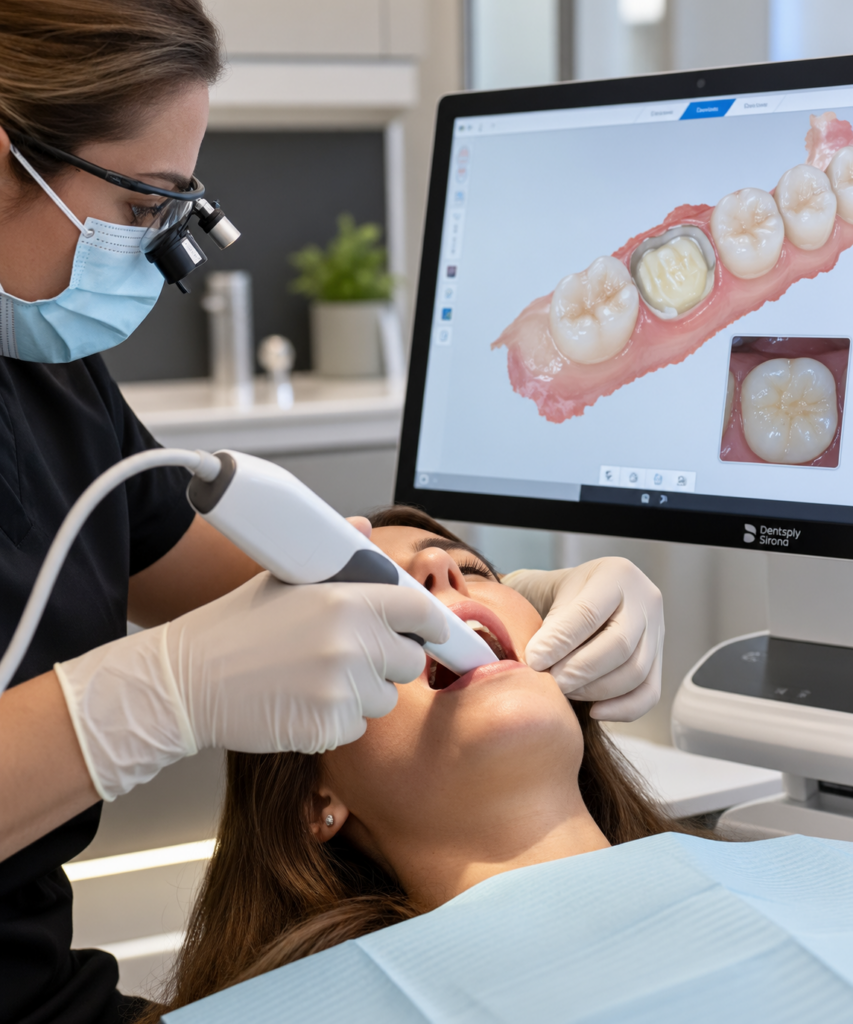
3. Creating a Digital Impression
Instead of traditional impression material, digital scanning can be used to create a detailed three-dimensional representation of the prepared tooth.
At Chatham Dental Arts, the practice uses digital scanning technology to create detailed digital impressions that can be used for crowns, bridges, night guards, and other restorations. |
4. Temporary Crown When Needed
Depending on the workflow and type of treatment, a temporary crown may be placed while the final restoration is being fabricated.
The temporary restoration helps protect the prepared tooth while the permanent crown is being completed.
5. Final Crown Placement
Once the final crown is ready, its fit, shape, bite, and appearance are evaluated.
The dentist then bonds or cements the crown into place using the appropriate dental material.
The goal is a restoration that functions comfortably and fits naturally within your bite.
How Do Dentists Make Dental Crowns Look Natural?
A crown shouldn’t simply look like a generic artificial tooth.
When a visible tooth is being restored, factors such as shade, shape, proportions, contours, and how the tooth interacts with the surrounding teeth all matter.
The restoration should also function properly when you bite and chew.
Modern digital workflows can help dentists and dental laboratories plan restorations with detailed information about the patient’s teeth. Chatham Dental Arts uses digital scanning and in-office 3D technology as part of its restorative workflow. |
But technology is only part of the process.
Good restorative dentistry also depends on careful diagnosis, thoughtful planning, and attention to the individual tooth.
How Long Do Dental Crowns Last?
A dental crown is designed to be durable, but it isn’t indestructible and it doesn’t last forever.
Cleveland Clinic reports that dental crowns commonly last around five to 15 years with proper care, although individual results can vary. Cleveland Clinic
Several factors can influence how long a crown lasts, including:
- Oral hygiene
- Gum health
- The condition of the tooth underneath
- Bite forces
- Tooth grinding or clenching
- The location of the crown
- The quality and fit of the restoration
- Diet and daily habits
The crown itself can also become worn, chipped, fractured, or loosened over time.
And even though the crown is artificial, the tooth underneath is still vulnerable to decay if it isn’t properly maintained.
That’s why regular dental examinations remain important after crown treatment.
How Do You Take Care of a Dental Crown?
A crown doesn’t mean you can stop treating the tooth like a natural tooth.
Continue to:
- Brush twice a day with fluoride toothpaste
- Clean between your teeth every day
- Keep up with recommended dental examinations
- Have professional cleanings as recommended
- Pay attention to changes in sensitivity or comfort
- Avoid using your teeth to bite extremely hard objects
Your dentist may also recommend additional protection if you grind or clench your teeth.
Good oral hygiene is particularly important because the tooth supporting the crown remains part of your natural mouth. Regular dental care can help identify problems around the restoration before they become more significant. Cleveland Clinic
What If a Crown Feels Sensitive or Uncomfortable?
Some sensitivity can occur after crown treatment, particularly during the early period following placement.
Cleveland Clinic notes that sensitivity to hot or cold can occur for a couple of weeks after a crown procedure. Cleveland Clinic
However, persistent or worsening discomfort deserves attention.
Contact your dental office if you notice:
- Significant or persistent pain
- A crown that feels loose
- A crown that has chipped or cracked
- A change in your bite that doesn’t settle
- Persistent sensitivity
- Swelling around the tooth
- A bad taste or odor associated with the area
A crown should ultimately feel like part of your normal bite—not something you constantly notice.
Are Dental Crowns Permanent?
No dental restoration should be thought of as guaranteed to last forever.
A crown is intended to provide long-term restoration and protection, but it can eventually require repair or replacement.
That doesn’t mean a crown is temporary in the everyday sense.
It means that your mouth is a constantly changing environment. Teeth experience chewing forces every day, and restorations are exposed to saliva, bacteria, temperature changes, and normal wear. NIDCR notes that physical stress and oral conditions can affect restorative materials over time.
The best way to think about a crown is as a long-term restoration that still requires maintenance.
What Are the Alternatives to a Crown?
A crown isn’t automatically the only way to restore a damaged tooth. If a tooth cannot be predictably restored, extraction and replacement may need to be discussed. Our guide to single dental implants explains one option for replacing a missing tooth.
Depending on how much healthy tooth structure remains, alternatives may include:
Filling
A filling may be appropriate when the damaged area is relatively limited.
Inlay or Onlay
An inlay or onlay can be considered when a tooth has more extensive damage than a filling can comfortably restore but may not require a full crown.
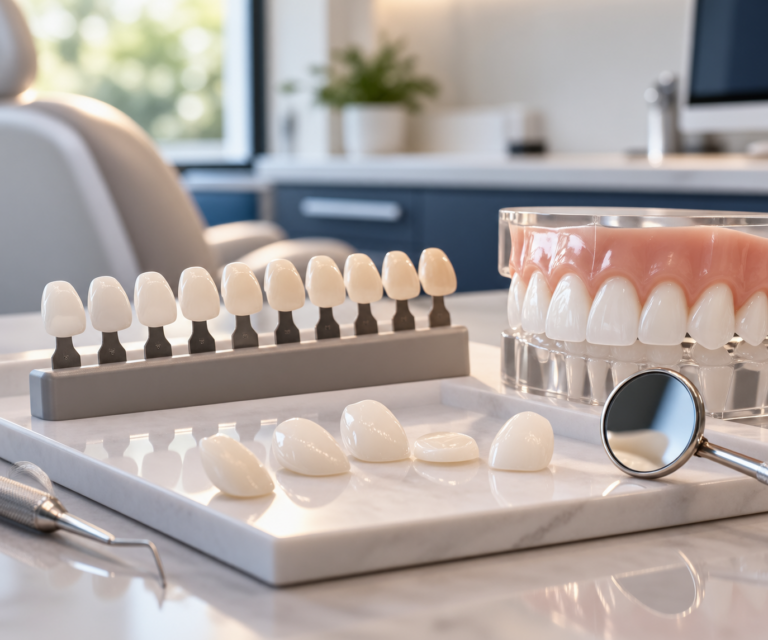
Veneer
A veneer is a different type of restoration and primarily covers the front surface of a tooth. It is generally considered for selected cosmetic concerns rather than teeth requiring substantial structural reinforcement. Cleveland Clinic
Extraction and Replacement
If a tooth is too severely damaged or compromised to be predictably restored, extraction and tooth replacement may need to be considered.
That could involve a dental implant, bridge, or another tooth-replacement option depending on the circumstances.
The important thing is not to decide on the restoration before determining whether the tooth itself can and should be preserved.
The Right Restoration Depends on the Tooth
There is no universal “best” crown—or universal rule that every damaged tooth needs one.
The right restorative treatment depends on the condition of the tooth, how much healthy structure remains, the health of the surrounding tissues, your bite, your goals, and the long-term outlook for the tooth.o I need a crown? Can’t we jusThe right restorative treatment depends on the condition of the tooth, how much healthy structure remains, the health of the surrounding tissues, your bite, your goals, and the long-term outlook for the tooth.
At Chatham Dental Arts, restorative dentistry includes crowns, bridges, dental implants, and other approaches designed around individual patient needs. The practice also uses digital scanning and 3D technology as part of its restorative workflow. |
The goal isn’t simply to place a crown.
It’s to determine what gives the tooth the best opportunity to remain functional, comfortable, and healthy for the long term.
If you’re told that you may need a crown, it’s reasonable to ask questions:
- Why is a crown recommended?
- How much healthy tooth structure remains?
- Are there more conservative options?
- What material is being recommended and why?
- How will the crown affect my bite?
- What should I expect during and after treatment?
- How should I care for the tooth afterward?
Understanding the reasoning behind treatment can make the process much easier.
Frequently Asked Questions
Are dental crowns painful?
The crown procedure is performed with local anesthesia, so you should not feel the tooth preparation itself. Some sensitivity or gum tenderness can occur afterward, particularly during the early healing period. Persistent or significant pain should be evaluated by your dentist.
How long do dental crowns last?
Dental crowns commonly last about five to 15 years with proper care, although individual crowns can last longer or need replacement sooner depending on factors such as wear, oral hygiene, bite forces, and the condition of the underlying tooth.
Can a crown be placed after a root canal?
Yes. Crowns are commonly used to restore teeth that have undergone root canal treatment, although the need for a crown depends on the individual tooth and how much structure remains.
Do dental crowns look like natural teeth?
They can be designed to closely resemble the surrounding teeth. The material, shade, shape, contours, and position of the restoration all contribute to the final appearance.
Can I get a crown instead of a filling?
Sometimes. A crown may be recommended when a tooth has lost too much structure for a filling to provide adequate support. But if a more conservative restoration can predictably restore the tooth, a crown may not be necessary.
Can a crown fall off?
It can happen, although a properly fitted and bonded crown is designed to remain in place. If a crown becomes loose or comes off, keep it safe and contact your dental office rather than trying to permanently reattach it yourself.
Can you get a cavity under a crown?
Yes. A crown covers the visible portion of the tooth, but the natural tooth structure underneath and around the crown can still develop decay. Good home care and regular dental visits remain important.
What is the difference between a crown and a cap?
There is no clinical difference. “Dental cap” is simply another common term for a dental crown. MouthHealthy