Single Dental Implant: A Thoughtful Solution for One Missing Tooth
Losing a tooth can affect more than your smile’s appearance. Depending on where the tooth is located, it can also affect chewing, the way your teeth come together, and the health of the surrounding area. A single dental implant can provide one option for replacing a missing tooth while supporting a natural-looking replacement.
A single dental implant uses an implant placed in the jawbone to support a custom replacement tooth. Unlike a traditional bridge, it does not typically require the neighboring teeth to be prepared simply to support the replacement tooth.
But an implant isn’t automatically the right choice for everyone. The best place to start is understanding how it works, what the process involves, and what your dentist needs to evaluate before recommending treatment.
What Is a Single Dental Implant?
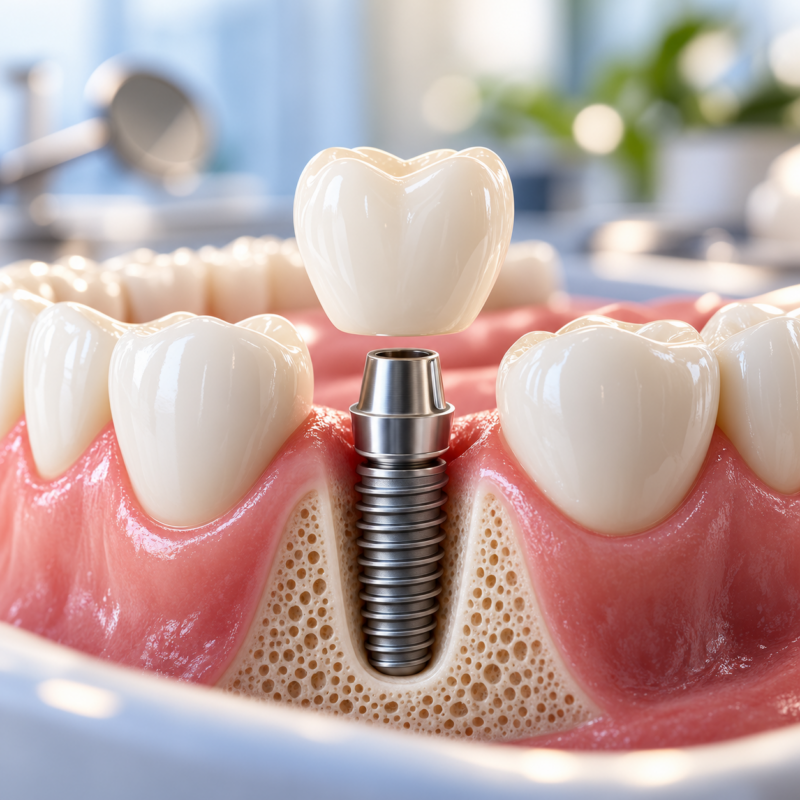
A single dental implant replaces one missing tooth using three main components:
The implant: A small post that is surgically placed into the jawbone and serves as an artificial tooth root.
The abutment: A connector that attaches the implant to the replacement tooth.
The crown: The visible portion of the restoration, custom-made to replace the missing tooth and blend with the surrounding teeth.
Once the implant has healed and the final crown is placed, the completed restoration is designed to function much like a natural tooth.
That is different from a traditional bridge, where the replacement tooth is connected to crowns placed over neighboring teeth.
Why Replace a Single Missing Tooth?
A missing tooth is more than an empty space.
Depending on which tooth is missing, it can affect chewing and the way your teeth come together. Over time, neighboring teeth can also shift into the space. Bone loss can occur in the area where a tooth has been lost as well.
Replacing the tooth can help restore the appearance and function of your smile.
An implant also replaces the missing tooth root, which is one of the features that distinguishes implant treatment from some other tooth-replacement options. Cleveland Clinic
That doesn’t mean every missing tooth requires an implant. It means the decision should consider the tooth, the surrounding structures, your overall health, and your goals.
Whether a single dental implant is right for you depends on several factors, including your gum health, available bone, bite, oral hygiene, overall health, and treatment goals. A consultation and appropriate imaging can help determine whether an implant is right for your situation.
How Is a Single Dental Implant Different From a Bridge?
This is one of the most common comparisons patients make.
A traditional dental bridge typically uses the teeth next to the missing tooth as support. That means those neighboring teeth need to be prepared to accommodate the restoration.
A single dental implant takes a different approach.
The implant is placed in the jawbone and supports its own crown, so the neighboring teeth generally do not need to be prepared simply to support the replacement tooth.
That distinction can be especially important when the teeth on either side of the missing tooth are healthy.
However, an implant involves surgery and a healing period, while a bridge may be completed without implant surgery. There isn’t one solution that is automatically right for every patient.
A consultation should compare the advantages, limitations, timeline, and long-term considerations of each option.
If you’re comparing different ways to replace a missing tooth, you can also explore this overview of dental implants and other implant options from Summit Family & Cosmetic Dentistry.
Is a Single Dental Implant Right for You?
Before recommending an implant, we need to look at more than the missing tooth.
The health of your gums, the amount and quality of available bone, your bite, your oral hygiene, your medical history, and certain lifestyle factors can all influence treatment planning.
There also needs to be enough bone to support the implant. If there isn’t, additional treatment such as bone grafting may sometimes be recommended before implant placement. Cleveland Clinic
Your general health matters, too. Certain medical conditions can affect healing, and tobacco use can interfere with healing after implant surgery.
This is why a dental implant consultation isn’t simply about asking, “Can I get an implant?”
It’s about determining whether an implant is appropriate for you.
Before deciding whether an implant is right for you, a thorough exam and treatment-planning appointment can help evaluate your teeth, gums, bite, and overall oral health. Learn more about what happens during a comprehensive dental exam at Chatham Dental Arts.
What Does the Single Dental Implant Process Look Like?
The process for a single dental implant usually takes place in several stages rather than during one appointment. The exact timeline depends on your individual needs and whether additional treatment, such as bone grafting, is necessary.
1. Consultation and treatment planning
The first step is evaluating the missing tooth and surrounding area.
At Chatham Dental Arts, CBCT imaging can provide a three-dimensional view of the jaw and surrounding structures, helping the dental team evaluate bone levels and plan implant treatment. |
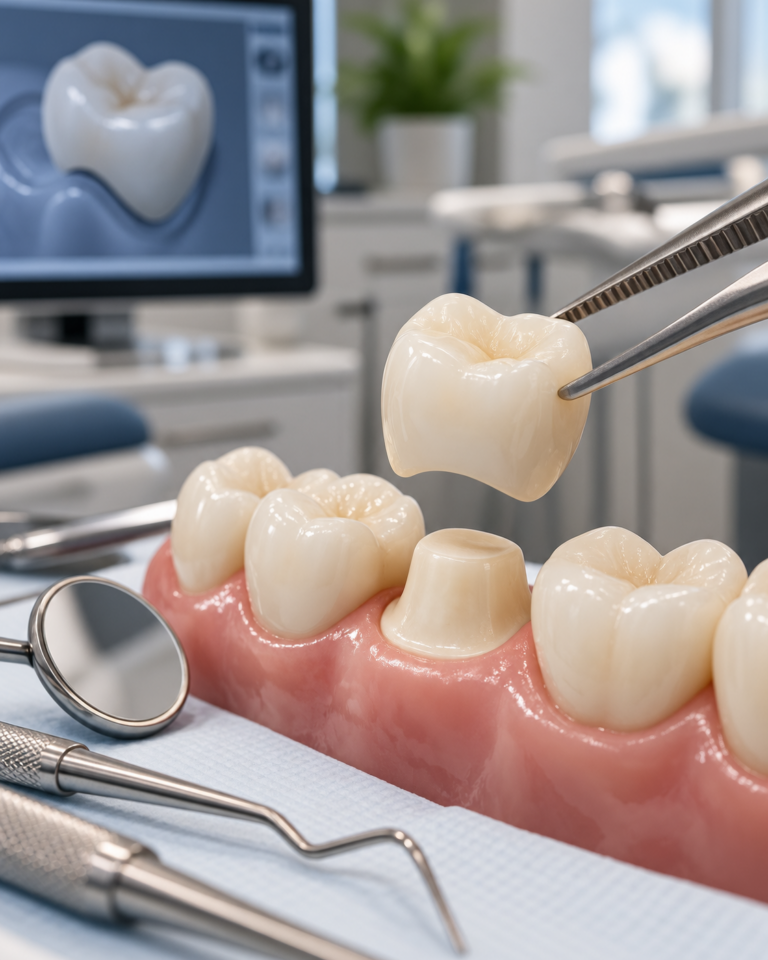
Digital scanning can also create a detailed model of the mouth that can be used when planning and designing dental restorations.
At Chatham Dental Arts, digital imaging and 3D technology can also help evaluate the jaw and plan implant treatment. Learn more about the practice’s dental implant and restorative services here.
2. Implant placement
The implant post is surgically placed into the jawbone.
The goal is to position it where it can properly support the eventual restoration while taking the surrounding teeth, bone, gums, and bite into consideration.
3. Healing and osseointegration
After placement, the implant needs time to heal.
During this stage, the bone gradually integrates with the implant surface. This process is called osseointegration, and it is what helps create the stable foundation needed for the replacement tooth.
The healing period varies depending on the individual case and treatment plan.
4. Abutment and crown
Once the implant has sufficiently healed, the final restoration can be attached.
For a single missing tooth, that restoration is typically a custom dental crown designed around the size, shape, color, and position of the surrounding teeth. MouthHealthy
The goal isn’t simply to fill the space.
It’s to create a replacement that fits naturally into the way you bite, chew, speak, and smile.
What Is Osseointegration?
The word may sound complicated, but the idea is straightforward.
Osseointegration is the process in which bone grows around and integrates with the dental implant.
This healing process is a major reason implants can provide a stable foundation for replacement teeth. It also explains why implant treatment isn’t always completed in a single appointment. Depending on the case, the implant may need to heal for several months before the final restoration is attached. MouthHealthy
Your dentist will determine the appropriate timeline based on your individual healing and treatment needs.
For a single dental implant, this healing period is an important part of allowing the implant to become securely integrated with the surrounding bone before the final restoration is placed.
What If There Isn’t Enough Bone?
Bone changes naturally after a tooth is lost.
For some patients, there may be enough bone for implant placement. For others, there may not be enough volume or density to provide the support needed for an implant.
In those situations, a bone graft may be recommended to build up the area before or as part of implant treatment. Cleveland Clinic
That doesn’t mean implant treatment is impossible.
It simply means the treatment plan may need an additional step.
This is another reason why imaging and careful evaluation are important before treatment begins.
What Does a Single Implant Feel Like After It Heals?
Once the implant has healed and the final crown is in place, the restoration is designed to function much like a natural tooth.
You can chew with it, brush it, and clean between it and the neighboring teeth as part of your normal oral hygiene routine. MouthHealthy
There is still an important distinction, however: an implant is not a natural tooth.
It does not have a natural tooth root or the same biological structures as the tooth that was lost. That’s why regular professional care remains important even after treatment is complete.
How Long Can a Dental Implant Last?
Dental implants are designed as a long-term tooth replacement option, but no dental restoration should be described as guaranteed to last forever.
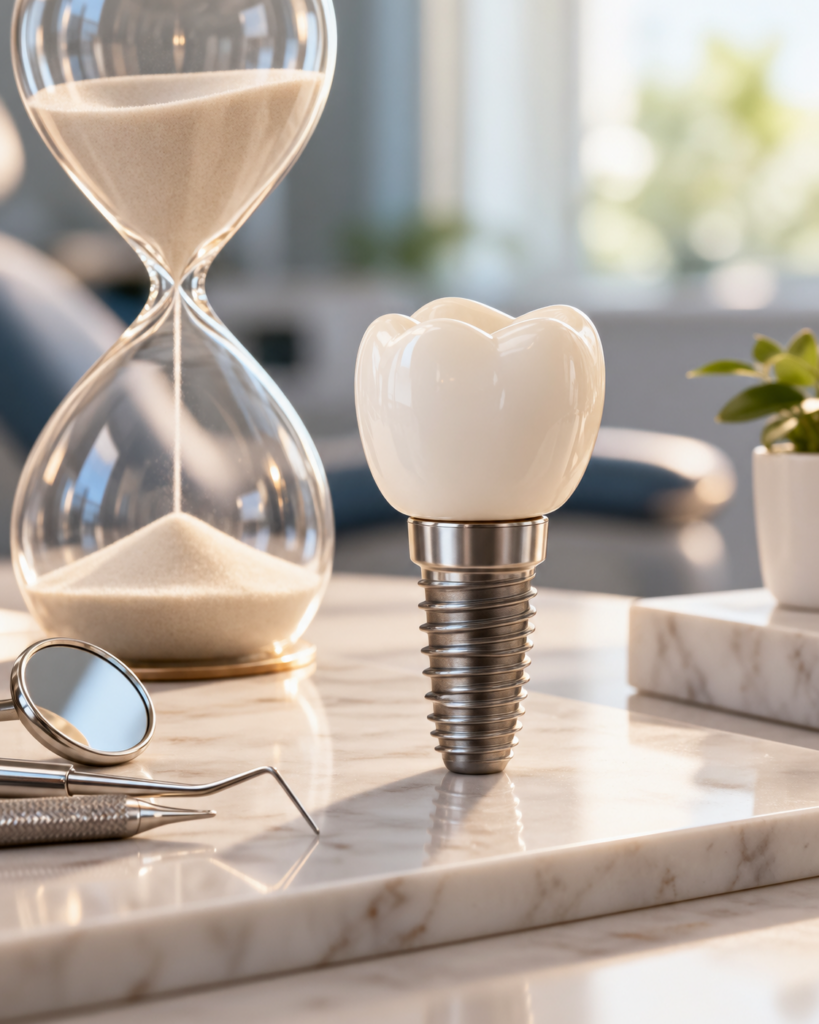
Longevity depends on factors such as oral hygiene, gum health, bite forces, smoking, general health, and regular professional maintenance.
With proper care, implants can remain functional for many years. Cleveland Clinic notes that dental implants can last a lifetime with proper care, while also emphasizing the importance of regular dental visits and good oral hygiene. Cleveland Clinic
The crown attached to the implant may eventually need maintenance or replacement even when the implant itself remains healthy.
How Do You Care for a Dental Implant?
One of the biggest misconceptions about implants is that they don’t require maintenance because they can’t develop cavities.
The implant itself cannot get a cavity, but the surrounding gums and tissues still need to remain healthy. The adjacent natural teeth also still need protection.
Good care includes:
- Brushing twice a day with fluoride toothpaste
- Cleaning between your teeth every day
- Following the cleaning instructions provided for your specific restoration
- Keeping regular dental appointments
- Avoiding tobacco
- Letting your dentist know about changes such as bleeding, swelling, discomfort, or looseness
The ADA recommends brushing twice daily with fluoride toothpaste, cleaning between teeth daily, and seeing your dentist regularly.
Long-term implant care still depends on good oral hygiene and regular professional care. For more information about maintaining your overall oral health, see this guide to preventive dentistry and professional dental care.
Is an Implant Always Better Than a Bridge?
Not necessarily.
A single dental implant can offer important advantages, particularly when the neighboring teeth are healthy and you want to replace one missing tooth without using those teeth as bridge supports.
But an implant also requires surgery, healing, and a longer treatment timeline in many cases.
A bridge may be appropriate in situations where implant treatment isn’t preferred or isn’t suitable.
The right question isn’t:
“Which treatment is better?”
It’s:
“Which option makes the most sense for my teeth, my health, and my long-term goals?”
That’s the conversation we want every patient to have before choosing a tooth-replacement option.
Replacing One Tooth Is Still a Personalized Decision
A missing tooth may seem like a straightforward problem, but replacing it well requires looking at the entire area—not just the empty space.
A single dental implant can provide a stable foundation for a custom crown while avoiding preparation of neighboring teeth that may otherwise be used to support a bridge. But candidacy, bone levels, gum health, bite, medical history, and personal preferences all matter. MouthHealthy
At Chatham Dental Arts, our approach is to evaluate those factors carefully, explain your options clearly, and build a treatment plan around your individual needs. Our practice uses CBCT imaging and digital scanning to support implant planning and restorative treatment. |
If you’re missing one tooth and wondering what your options are, an implant consultation can help you understand whether a single dental implant is appropriate—and what the alternatives may look like.
Frequently Asked Questions:
Is a single dental implant better than a bridge?
Neither option is automatically better for everyone. A single implant can replace one tooth without using neighboring teeth as bridge supports, but it requires surgery and a healing period. A bridge may be appropriate depending on the condition of the surrounding teeth and the patient’s needs. Cleveland Clinic
How long does a single dental implant take?
The timeline varies. Implant treatment may require several stages and several months of healing before the final crown is placed. Some cases can be completed more quickly, while others require additional procedures such as bone grafting. MouthHealthy
Does a dental implant replace the entire tooth?
A dental implant replaces the missing tooth root, while a custom crown replaces the visible portion of the tooth. An abutment connects the implant and crown. MouthHealthy
Can you get an implant if you’ve had a tooth missing for years?
Possibly. The answer depends largely on the condition of the bone and surrounding tissues. Bone loss can occur after tooth loss, so additional treatment such as bone grafting may sometimes be needed. Cleveland Clinic
How do you clean a single dental implant?
You generally continue brushing twice daily and cleaning between your teeth every day, while following any additional instructions your dental team provides for your restoration. Regular professional dental visits are also important. MouthHealthy
Can a dental implant look like a natural tooth?
Yes. The crown placed over a single implant is custom-made based on factors such as the size, shape, color, and position of the surrounding teeth. The goal is to create a restoration that fits naturally into your smile.