Porcelain Veneers: What to Know Before Transforming Your Smile
If you’re unhappy with the appearance of your smile, you may have come across porcelain veneers. They are often associated with dramatic smile makeovers, but veneers are not simply a way to cover every imperfection.
Porcelain veneers are custom-made shells that are bonded to the front surfaces of teeth. They can improve the appearance of teeth with certain types of discoloration, chips, gaps, or irregular shapes. But because veneer treatment can involve removing some natural enamel and is generally not reversible, the decision deserves more thought than simply choosing a shade of white.
At Chatham Dental Arts, we believe cosmetic dentistry should begin with understanding what you want to change, what your teeth need, and which treatment makes the most sense for your long-term oral health.
What Are Porcelain Veneers?
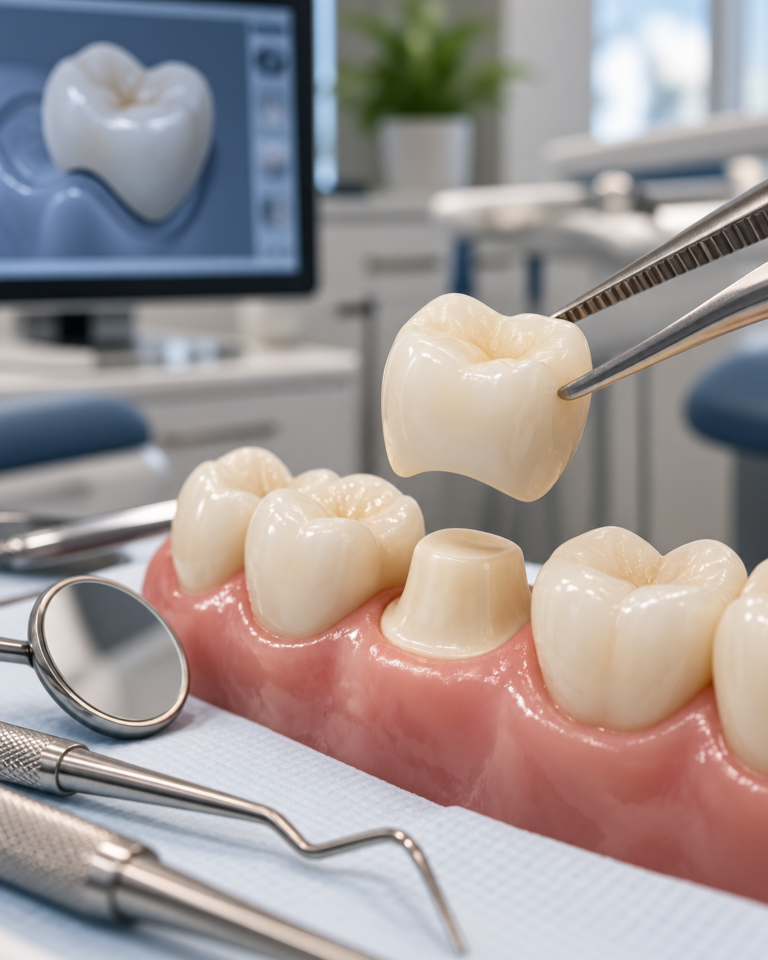
A porcelain veneer is a thin, custom-made restoration designed to cover the front surface of a tooth.
Unlike a dental crown, which covers the entire visible portion of a tooth, a veneer focuses primarily on the front surface. This makes veneers particularly useful when the main concern is appearance rather than rebuilding a significantly weakened or damaged tooth. MouthHealthy
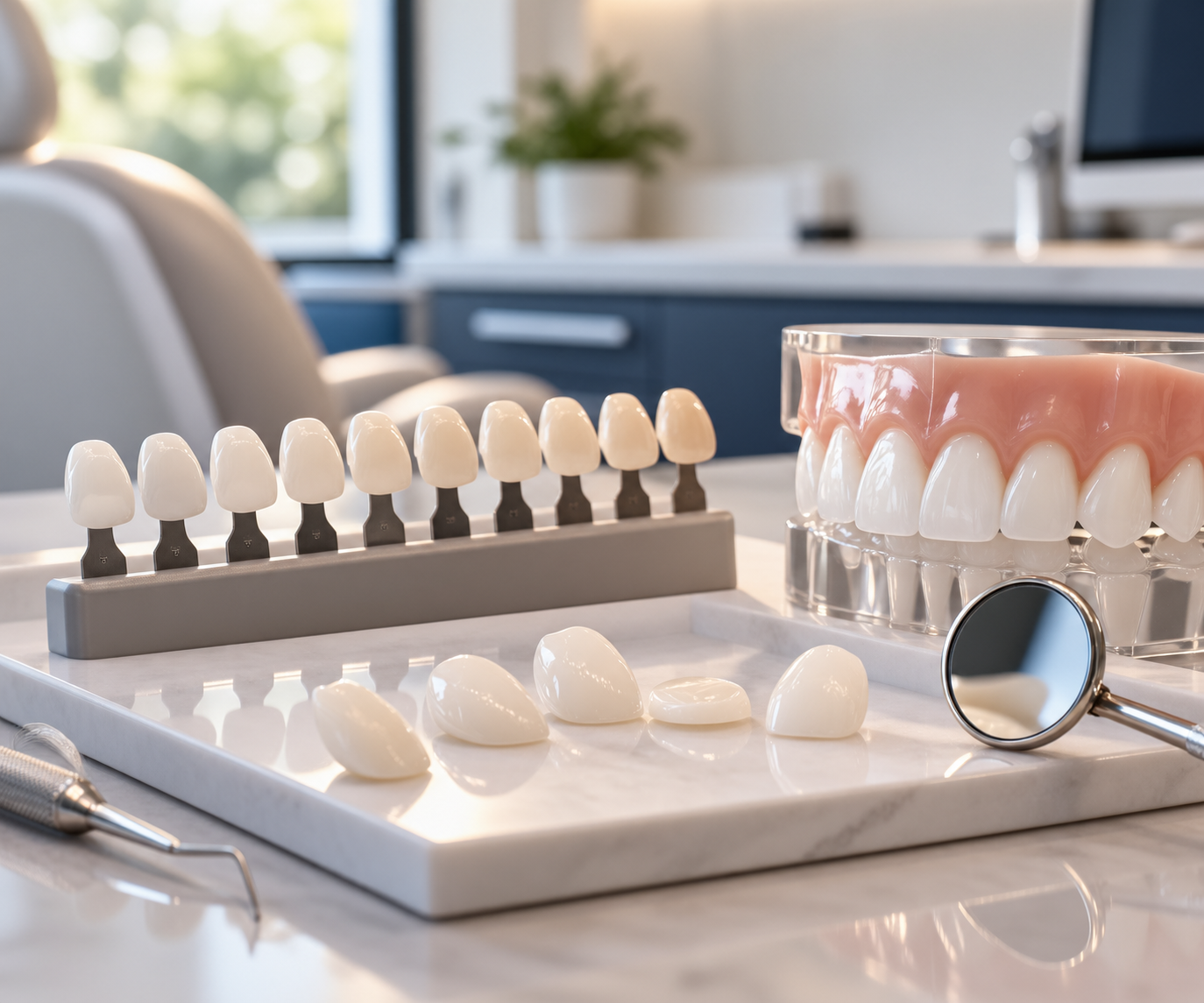
Because each veneer is custom-made, treatment involves more than simply selecting a color. The shape, size, proportions, shade, and relationship between the teeth all contribute to how the finished smile looks.
That is why good veneer treatment starts with planning—not preparation.
What Can Porcelain Veneers Improve?
Porcelain veneers may be considered for several cosmetic concerns, including:
- Teeth with discoloration that does not respond well to whitening
- Chipped or worn teeth
- Certain misshapen teeth
- Teeth that appear too small or disproportionate
- Some spaces or gaps between teeth
- Certain cosmetic irregularities in the appearance of the front teeth
Veneers essentially camouflage selected cosmetic concerns by creating a new visible surface over the front of the tooth. MouthHealthy
That does not mean veneers are automatically the best solution for every concern.
For example, if discoloration is the only issue, professional whitening may be a more conservative option. If a small chip can be corrected with bonding, a veneer may not be necessary. The right treatment depends on the condition of the tooth and the result you are trying to achieve.
Are Porcelain Veneers Right for Everyone?
This is one of the most important questions to answer before starting treatment. Before cosmetic treatment, a comprehensive dental exam can help evaluate the health of your teeth, gums, bite, and existing dental work.
Veneers are generally considered after the dentist evaluates the health of the teeth and gums. Existing decay or gum disease should be addressed before cosmetic treatment because placing a veneer over an unhealthy tooth does not solve the underlying problem.
Your bite and oral habits also matter.
Patients who regularly clench or grind their teeth may place additional stress on veneers. Certain bite relationships can also affect whether veneers are an appropriate option.
And expectations matter just as much as anatomy.
A good cosmetic result isn’t necessarily the whitest or most uniform smile possible. It should make sense for your facial features, existing teeth, goals, and overall appearance.
Why Treatment Planning Matters
One of the biggest differences between thoughtfully planned cosmetic dentistry and a one-size-fits-all approach is what happens before the veneers are made.
A cosmetic consultation should give you an opportunity to discuss what you like and dislike about your smile. Your dentist can evaluate your teeth and gums, examine your bite, consider your existing restorations, and determine whether veneers are appropriate.
The design process can also involve digital records or scans. Chatham Dental Arts uses digital scanning technology as part of its approach to modern dental care, allowing the team to create detailed digital models of the teeth and plan treatment with greater precision.
The goal isn’t simply to make the teeth look different.
It’s to create a result that works with the rest of your smile.
What Happens During Porcelain Veneer Treatment?
The exact process varies depending on the case, but porcelain veneer treatment generally involves several stages.
1. Consultation and evaluation
The first step is determining whether veneers are appropriate for you.
Your dentist will evaluate your teeth, gums, bite, and cosmetic concerns and discuss what you hope to accomplish.
2. Treatment planning
The desired tooth shape, proportions, shade, and overall appearance are considered before the final restorations are created.
This is where communication becomes especially important. You should have a clear understanding of what is being planned and what changes you can reasonably expect.
3. Tooth preparation
Traditional porcelain veneers generally require the removal of a small amount of enamel from the front of the tooth so the veneer can fit properly and bond securely. The amount of preparation varies depending on the tooth and the treatment design. MouthHealthy
4. Digital scan or impression
Your dentist may use a digital scanner or a traditional impression to create an accurate model of your teeth. That information is used to fabricate your custom veneers. MouthHealthy
5. Try-in and final placement
When the veneers are ready, they are evaluated for fit, shape, and appearance before being permanently bonded to the teeth.
This is an important stage because small adjustments to shape or shade can make a meaningful difference in the overall result.
Do Porcelain Veneers Require Removing Enamel?
This is a question we believe every veneer patient should ask.
Traditional porcelain veneers generally require some enamel preparation. Because natural tooth structure is altered, conventional veneer treatment is typically considered irreversible. MouthHealthy
You may see advertisements for “no-prep” or “minimal-prep” veneers. These approaches can involve less enamel removal in selected cases, but they are not automatically appropriate for everyone. Even so-called no-prep veneers may require some preparation depending on the patient’s anatomy and treatment goals. Cleveland Clinic
The important question isn’t simply, “Can I get veneers without removing enamel? ”
It is:
What approach will give me an appropriate result while preserving as much healthy tooth structure as reasonably possible?
That is a conversation worth having before treatment begins.
How Natural Can Porcelain Veneers Look?
Modern porcelain materials can be designed to closely mimic the appearance of natural teeth.
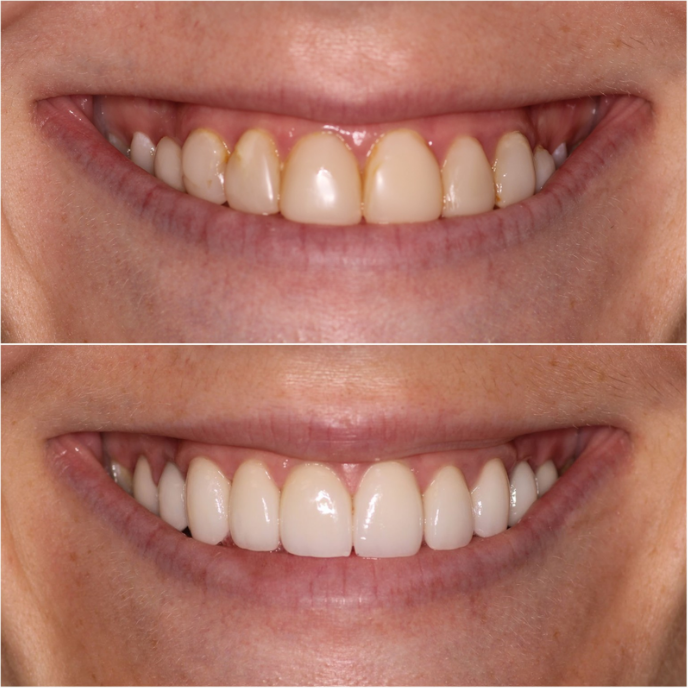
But natural-looking results don’t come from color alone.
Tooth shape, translucency, surface texture, proportions, symmetry, and how the veneers relate to the surrounding teeth all contribute to the final appearance.
This is one reason cosmetic dentistry should be personalized rather than based on a single “ideal” smile.
Some patients want a subtle improvement that looks almost unnoticeable. Others want a more significant change. Neither approach is automatically right or wrong.
The important part is that the treatment reflects the patient’s goals while remaining appropriate for the teeth and surrounding oral structures.
How Long Do Porcelain Veneers Last?
Porcelain veneers are designed to be long-lasting, but they are not indestructible or guaranteed to last forever.
Research has found generally high survival rates for porcelain laminate veneers over longer follow-up periods. A systematic review published in 2021 reported a 10-year estimated cumulative survival rate of approximately 95.5%, although outcomes varied among studies and complications such as fracture and bonding can occur. PubMed
A more recent 2024 systematic review also found high long-term survival rates across several ceramic veneer materials, while noting differences in complication rates between materials. PubMed
Those numbers should be viewed as evidence from groups of patients—not a promise about how long an individual patient’s veneers will last.
Longevity can be affected by factors such as oral hygiene, bite forces, grinding or clenching, the condition of the underlying teeth, and how the restorations are maintained.
How Do You Care for Porcelain Veneers?
Veneers don’t replace the need for good oral hygiene.
You still need to brush twice a day with fluoride toothpaste and clean between your teeth every day. The teeth underneath and around veneers can still develop cavities or gum problems. MouthHealthy
It’s also wise to avoid habits that place unnecessary stress on your teeth, such as biting your fingernails or chewing on hard objects. If you grind or clench your teeth, your dentist may recommend a custom mouth guard depending on your individual situation. MouthHealthy
Regular dental visits remain important as well. Your dentist can monitor the veneers, the surrounding teeth and gums, and the overall health of your mouth.
In other words, veneers may change the appearance of your smile, but they don’t change the fundamentals of good dental care.
Porcelain Veneers vs. Other Cosmetic Options
Veneers are only one option in cosmetic dentistry.
Depending on what you want to change, another treatment may make more sense.
Teeth whitening may be appropriate when the primary concern is tooth discoloration and the teeth themselves are otherwise suitable for whitening.
Dental bonding uses tooth-colored composite material to reshape or improve the appearance of teeth. It may require less removal of natural tooth structure and can often be completed more quickly, although composite does not have the same properties as porcelain and may be less resistant to staining and wear. MouthHealthy
Orthodontic treatment may be more appropriate when the main concern involves tooth position or alignment rather than simply appearance.
And in some cases, restorative treatment such as a crown may be more appropriate when a tooth is significantly weakened or damaged.
The best cosmetic treatment isn’t necessarily the most extensive one.
It’s the one that appropriately addresses the problem while taking the health and future of your teeth into consideration.
The Best Veneers Are Planned Around You
At Chatham Dental Arts, our cosmetic dentistry services include veneers, bonding, whitening, and smile makeovers.
Porcelain veneers can make a meaningful difference in the appearance of a smile, but the most important part of treatment happens before the veneers are ever bonded.
A thoughtful consultation should answer questions such as:
- What would you like to change?
- Are your teeth and gums healthy enough for cosmetic treatment?
- Would veneers actually address the concern?
- Could a more conservative treatment accomplish the same goal?
- How much tooth preparation is appropriate?
- What should the final smile look like?
- How will the result fit with your bite and long-term oral health?
At Chatham Dental Arts, our approach to cosmetic dentistry is centered on personalized treatment planning and natural-looking results. Our practice offers cosmetic treatments including veneers, bonding, whitening, and smile makeovers, allowing treatment to be selected around the patient’s individual goals rather than using the same approach for every smile. |
If you’re considering porcelain veneers, a consultation is the right place to start. You don’t have to decide on treatment simply because you’re interested in it. The first step is understanding your options and determining what makes sense for your smile.
Frequently Asked Questions:
Are porcelain veneers permanent?
Porcelain veneers are generally considered irreversible because traditional treatment involves removing some natural enamel. While veneers can last many years with appropriate care, they may eventually need repair or replacement.
Do porcelain veneers look natural?
They can. The appearance of veneers depends on factors such as shape, shade, translucency, proportions, and how they are designed in relation to the surrounding teeth. A personalized treatment plan can help create a result that looks appropriate for the individual smile.
Do porcelain veneers damage your teeth?
Veneers do not inherently damage healthy teeth, but traditional veneer treatment does involve removing some enamel. Because that natural tooth structure does not grow back, the decision should be made carefully with a dentist after evaluating the health and condition of the teeth.
Can porcelain veneers fix chipped teeth?
Yes, porcelain veneers may be an option for certain chipped or worn teeth when the tooth is otherwise suitable for cosmetic treatment. The appropriate restoration depends on the size and location of the damage and the overall condition of the tooth.
Can veneers fix stained teeth?
Veneers can sometimes improve the appearance of discoloration that does not respond adequately to whitening. However, if whitening can safely address the concern, it may be a more conservative option.
Can I get porcelain veneers if I grind my teeth?
Grinding or clenching can place additional stress on veneers and may affect whether they are a good option. Your dentist should evaluate your bite and oral habits before recommending treatment. In some cases, protective measures such as a mouth guard may be appropriate.
How long do porcelain veneers last?
Research shows high long-term survival rates for porcelain veneers, but longevity varies by patient and circumstance. A recent systematic review reported an estimated 10-year cumulative survival rate of 95.5% for porcelain laminate veneers, while individual outcomes can differ.