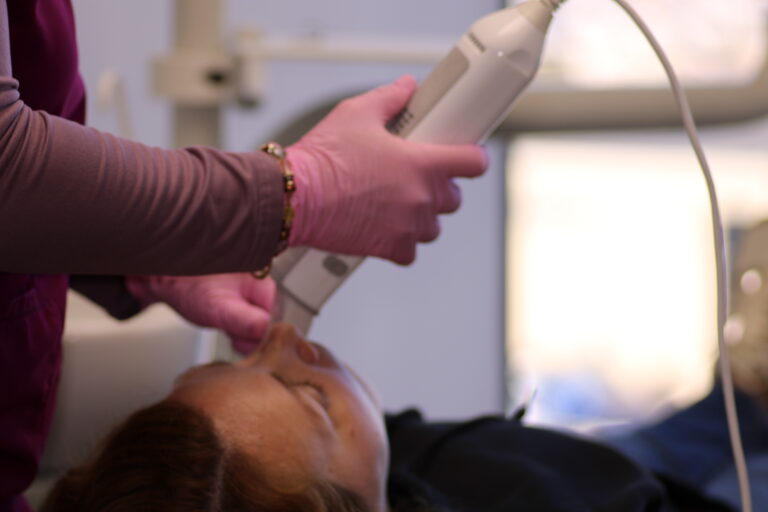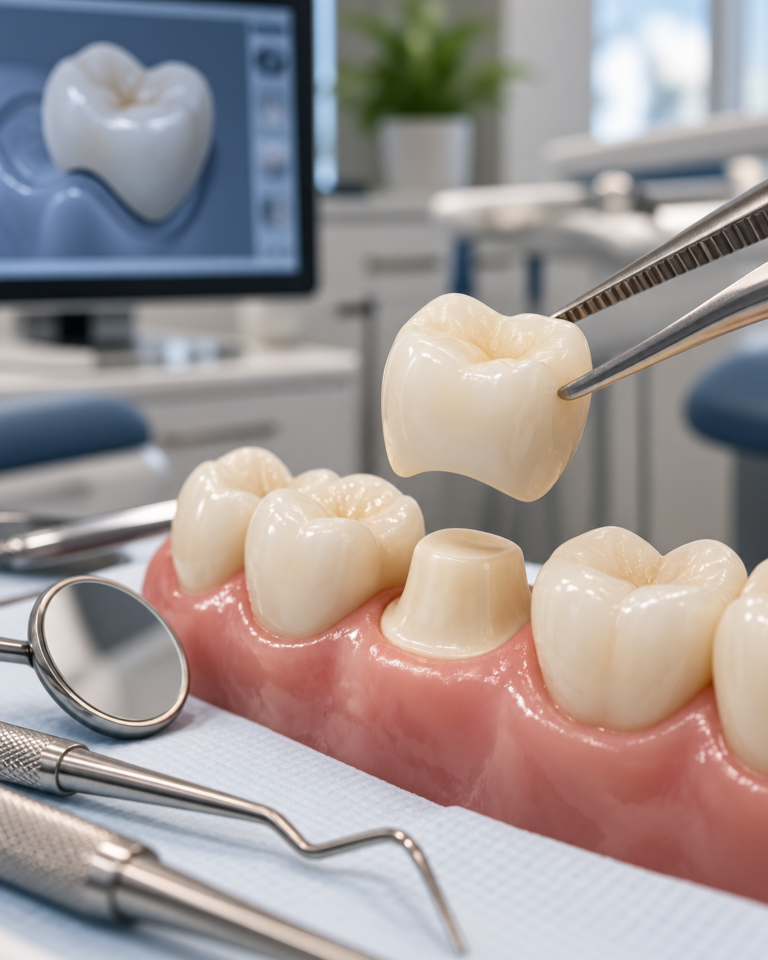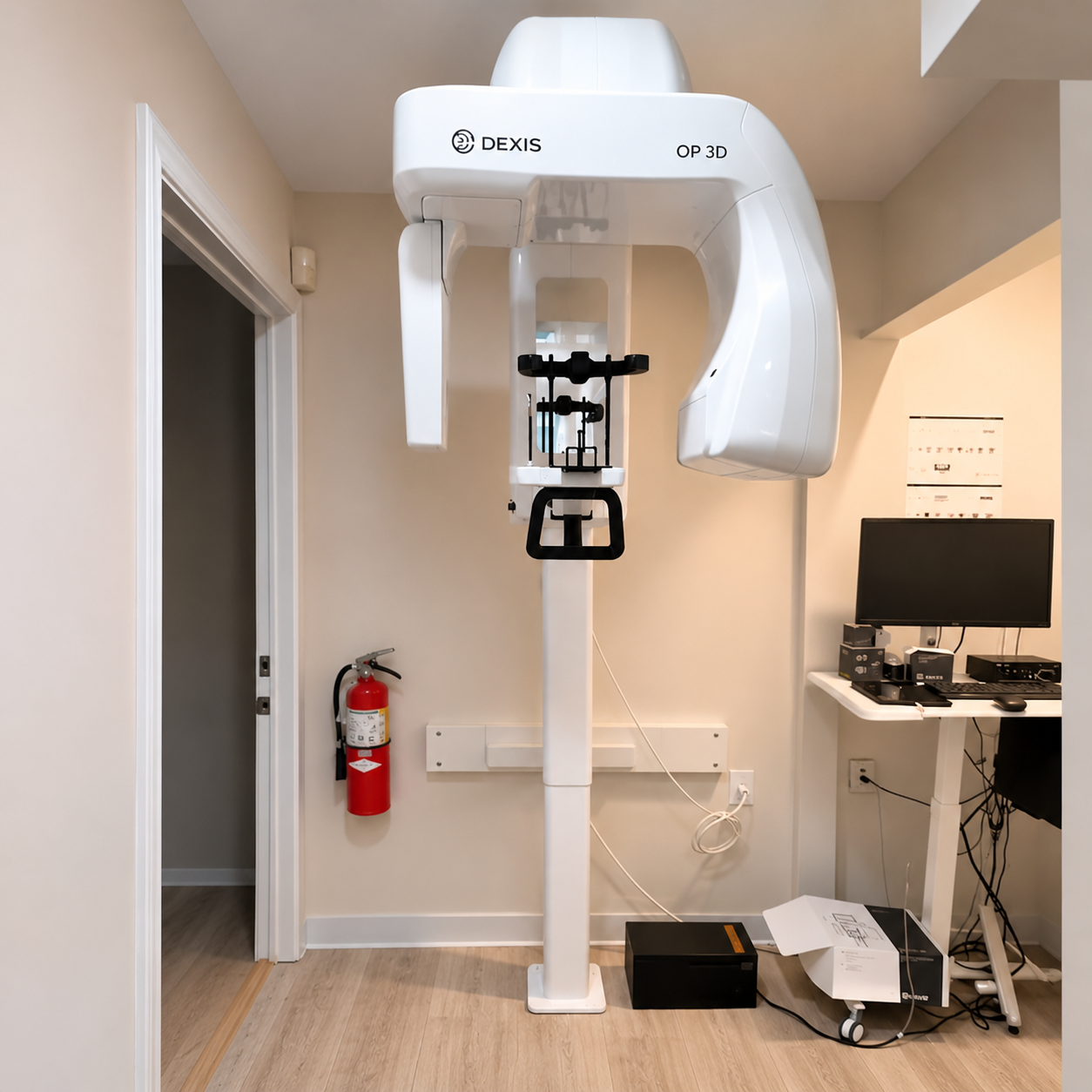
A CBCT scan gives your dentist a detailed, three-dimensional view of your teeth, jawbone, and nearby structures. This type of imaging can be especially helpful when planning certain treatments or evaluating areas that may be difficult to understand with traditional dental X-rays alone.
At Chatham Dental Arts, modern dental technology supports thoughtful diagnosis and personalized treatment planning. Learn how CBCT scans work, why your dentist may use them, and what to expect during your visit.
What Is a CBCT Scan?
CBCT stands for cone beam computed tomography. It is a type of dental imaging that uses a cone-shaped X-ray beam to capture information from different angles. A computer combines the images to create a 3D view of the area.
Unlike a traditional dental X-ray, which provides a flat, two-dimensional image, a CBCT scan can show structures from multiple perspectives.
Depending on the scan, your dentist may be able to examine:
- Teeth and their roots
- Jawbone shape and structure
- The position of certain nerves
- The relationship between teeth and nearby anatomical structures
- Areas being considered for dental implant treatment
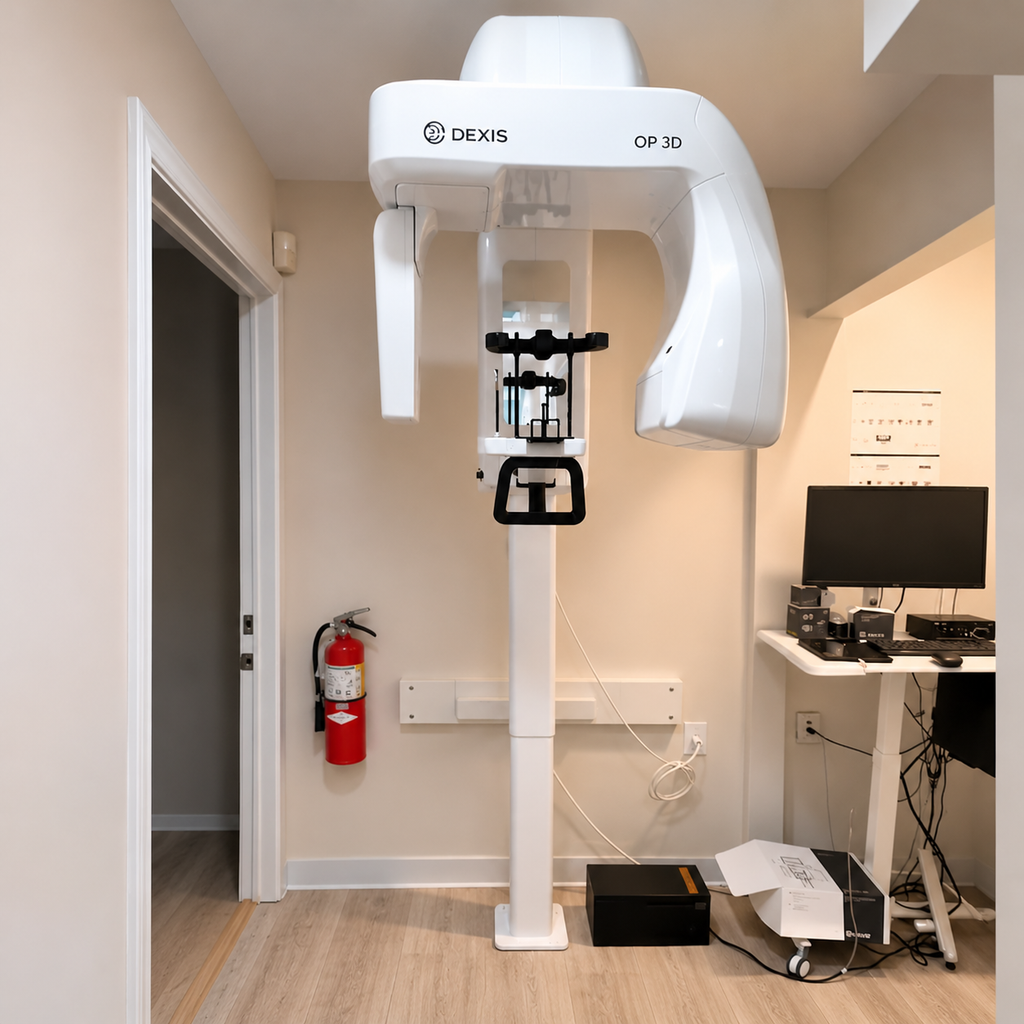
The scan provides additional information that may help your dentist better understand your oral anatomy.
How Is a CBCT Scan Different From a Regular Dental X-Ray?
Both traditional dental X-rays and CBCT scans use X-ray technology, but they provide different types of images.
A regular dental X-ray is often enough to evaluate common dental concerns. CBCT imaging creates a 3D view and may be useful when your dentist needs more detailed information.
| Traditional Dental X-ray | CBCT Scan |
|---|---|
| Produces a 2D image | Produces a 3D image |
| Often used for routine dental evaluations | Used for selected diagnostic or treatment-planning needs |
| Provides a focused view of teeth and surrounding areas | Can show teeth, bone, and nearby structures from different angles |
| Usually involves less radiation than CBCT | Typically involves more radiation than conventional dental X-rays |
A CBCT scan is not automatically better for every situation. The right type of imaging depends on what your dentist needs to evaluate.
When Might a Dentist Recommend a CBCT Scan?
Your dentist may recommend CBCT imaging when a more detailed view can help answer a specific clinical question.
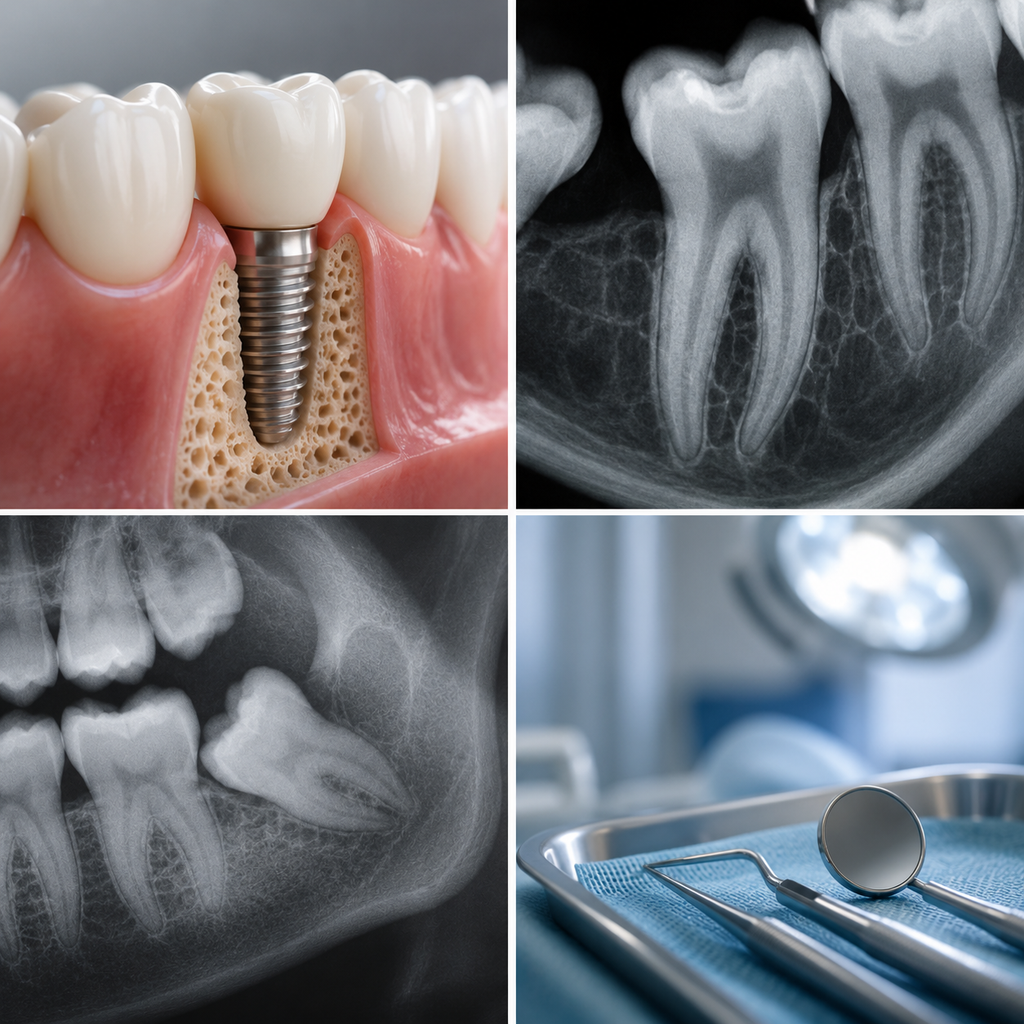
Dental Implant Planning
Before placing a dental implant, your dentist may need to evaluate the available jawbone and the position of nearby structures.
A CBCT scan can help show bone dimensions and the location of important anatomy. This information may support more detailed implant planning.
Learn more about how dental imaging supports treatment planning by exploring this overview of dental implant treatment from Summit Family & Cosmetic Dentistry
Evaluating Complex Tooth or Root Concerns
Some teeth have complex root structures or may be difficult to assess with standard images. In selected cases, CBCT imaging can provide additional information to help evaluate the area.
Impacted Teeth
A tooth that has not erupted normally—such as an impacted wisdom tooth—may need a closer evaluation. A CBCT scan can help show its position in relation to nearby teeth and structures.
Certain Oral Surgery Cases
When planning some surgical procedures, a 3D view may help the dentist understand the anatomy and assess the area more thoroughly.
The important point: Your dentist recommends CBCT scans only when they can provide useful diagnostic information. Your dentist will consider your symptoms, dental history, examination, and existing images before deciding whether one is appropriate.
What Happens During a CBCT Scan?
If your dentist recommends a CBCT scan, the process is generally straightforward.
- Getting positioned: You’ll stand or sit near the imaging machine. The dental team will help position your head.
- Preparing for the scan: You may be asked to remove items such as glasses, earrings, or other metal accessories that could affect the image.
- Taking the image: The scanner rotates around your head while capturing images. You’ll need to remain still for a short time.
- Reviewing the results: Your dentist evaluates the images alongside your examination and dental history.
The scan is non-invasive. It does not require an injection, and the imaging itself is typically quick. Your dental team can explain how the scanner works and what you can expect during your visit.
Is a CBCT Scan Safe?
CBCT scans use X-rays, so radiation exposure is part of the procedure. Dental CBCT generally involves less radiation than medical CT scans, but it typically involves more than conventional dental X-rays.
That is why CBCT should be used when the expected diagnostic benefit justifies the exposure.
Dentists consider factors such as:
- Whether the scan is necessary to answer a clinical question
- Whether existing images are sufficient
- Whether another imaging method could provide the needed information
- How to limit the scan to the area that needs evaluation
If you have questions about radiation exposure, let your dental team know. They can explain why the scan is being considered and discuss its benefits and risks for your particular situation.
How 3D Dental Imaging Supports Personalized Treatment
Every patient’s teeth, jaw, and anatomy are different. When additional imaging is appropriate, a CBCT scan can help provide information that may not be visible in a traditional dental X-ray.
This can be useful when planning certain procedures, including dental implant treatment or selected oral surgery cases. The scan is one part of the diagnostic process—not a replacement for a clinical examination or your dentist’s professional judgment.
At Chatham Dental Arts, technology is most valuable when it helps the team make informed decisions and explain treatment options clearly.
Do You Need a CBCT Scan?
Not every patient needs a CBCT scan. Many routine dental concerns can be evaluated with a clinical examination and traditional dental X-rays.
If your dentist recommends 3D imaging, you can ask:
- What information will the scan provide?
- Why is it needed for my treatment?
- Are my previous dental images available?
- Is another type of imaging suitable?
Understanding the reason for the scan can help you feel more comfortable and informed about your care.
Frequently Asked Questions
What does CBCT stand for in dentistry?
CBCT stands for cone beam computed tomography. It is a type of dental imaging that creates three-dimensional views of teeth, jawbone, and surrounding structures.
Is a CBCT scan the same as a regular dental X-ray?
No. A regular dental X-ray produces a 2D image, while a CBCT scan creates a 3D view. CBCT may be recommended when additional detail is needed.
Does a CBCT scan hurt?
No. The scan is non-invasive and does not involve needles. You’ll usually need to remain still while the machine rotates around your head.
How long does a dental CBCT scan take?
The imaging itself is generally quick. The total appointment time may vary depending on positioning, the equipment, and the area being scanned.
Does everyone need a CBCT scan before dental implants?
Not everyone. Your dentist will determine whether CBCT imaging is appropriate based on your examination, treatment needs, and available images.
Is CBCT imaging safe?
CBCT uses X-rays, so it should be recommended only when the expected benefit outweighs the risks. Your dentist can explain why it may be useful for your specific treatment.
Let’s Talk About Your Smile
Ready to take the next step toward a healthier, more confident smile?
Our team at Chatham Dental Arts is here to help. Get in touch to schedule your consultation or ask us any questions.
☎️ Call Us
+1 (973)-377-3000
✉️ Email Us
chathamdentalartsnj@gmail.com
📅 Book Online
Schedule Your Consultation
We look forward to welcoming you to our practice!