A small chip, a noticeable gap, or an uneven tooth can make you feel self-conscious about your smile. If you want to improve these imperfections without extensive dental treatment, composite bonding may be an option worth exploring.
Composite bonding is a cosmetic dental treatment that uses tooth-colored resin to improve the shape, appearance, or surface of a tooth. Your dentist carefully applies and shapes the material to blend with your natural teeth. Depending on the concern being addressed, bonding may help repair minor chips, improve uneven edges, close small gaps, or cover certain discolorations.
For patients considering cosmetic dentistry in Chatham, NJ, understanding how composite bonding works can make it easier to decide whether this treatment aligns with their goals. The right approach depends on the condition of your teeth, your bite, and the type of improvement you want to achieve.
What Is Composite Bonding?
Composite bonding is a cosmetic dental procedure that uses a tooth-colored composite resin to improve the appearance of a tooth. The material is applied directly to the tooth, shaped to create the desired contour, and hardened with a special curing light.
Your dentist then refines and polishes the material to help it blend with the surrounding teeth.
Unlike porcelain veneers, which are custom-made shells placed over the front surfaces of teeth, composite bonding typically involves applying resin directly to the tooth. This allows the dentist to make small adjustments to the tooth’s shape and appearance during the appointment.
Composite bonding can be a conservative option because many cases require little or no removal of healthy tooth structure. However, the amount of preparation depends on the tooth’s condition and the desired result.
The goal is to create a natural-looking improvement while maintaining healthy tooth structure whenever possible.
What Dental Problems Can Composite Bonding Fix?
Composite bonding works best for selected cosmetic concerns that do not require more extensive treatment. Your dentist will examine your teeth and determine whether bonding can address the issue safely and effectively.
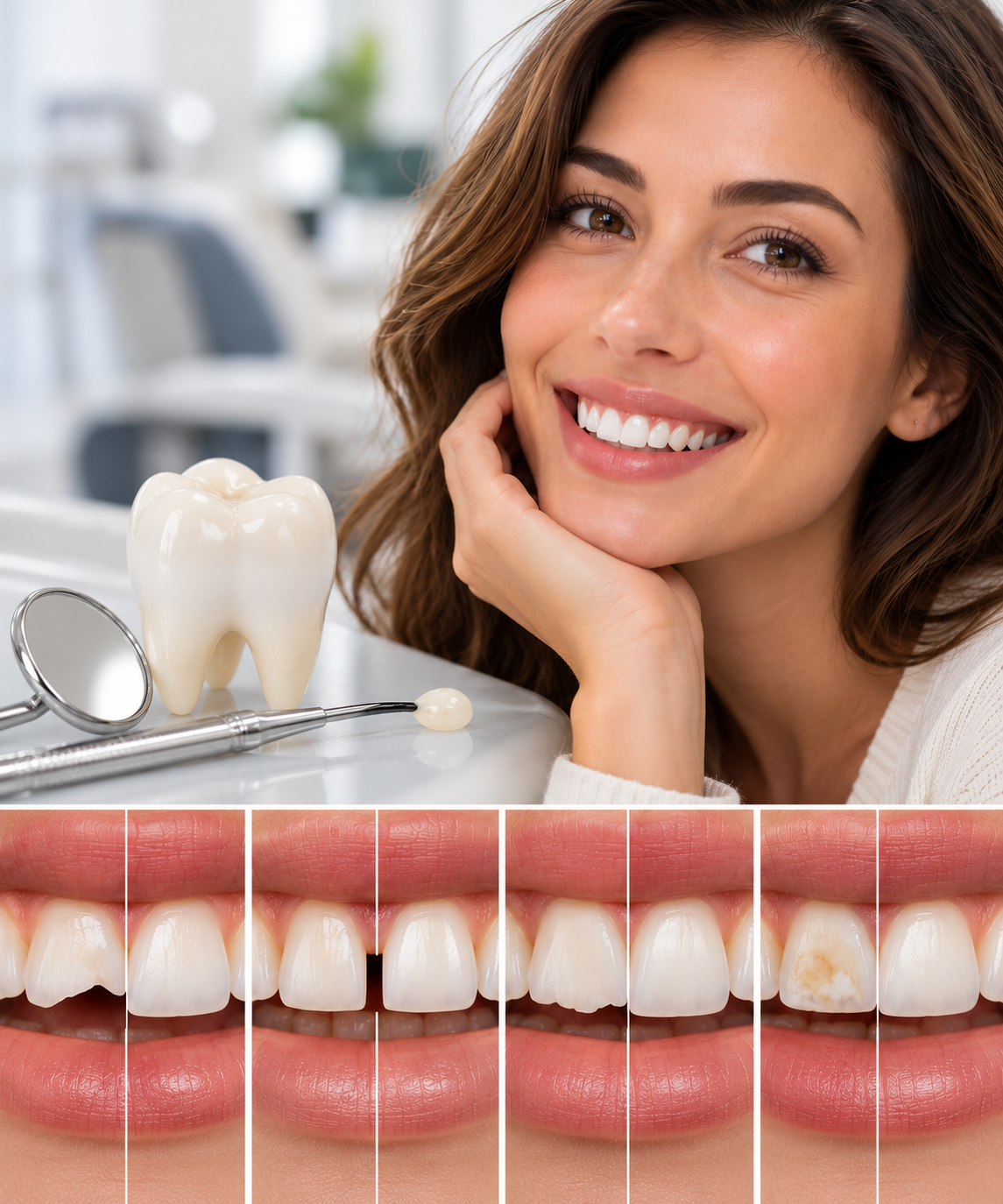
1. Chipped or Worn Teeth
Small chips along the edges of teeth can change the appearance of your smile. Minor wear may also leave teeth looking uneven.
Composite resin can be shaped to rebuild small missing areas and refine tooth contours. The dentist selects a shade that complements your natural teeth and polishes the material to create a smooth finish.
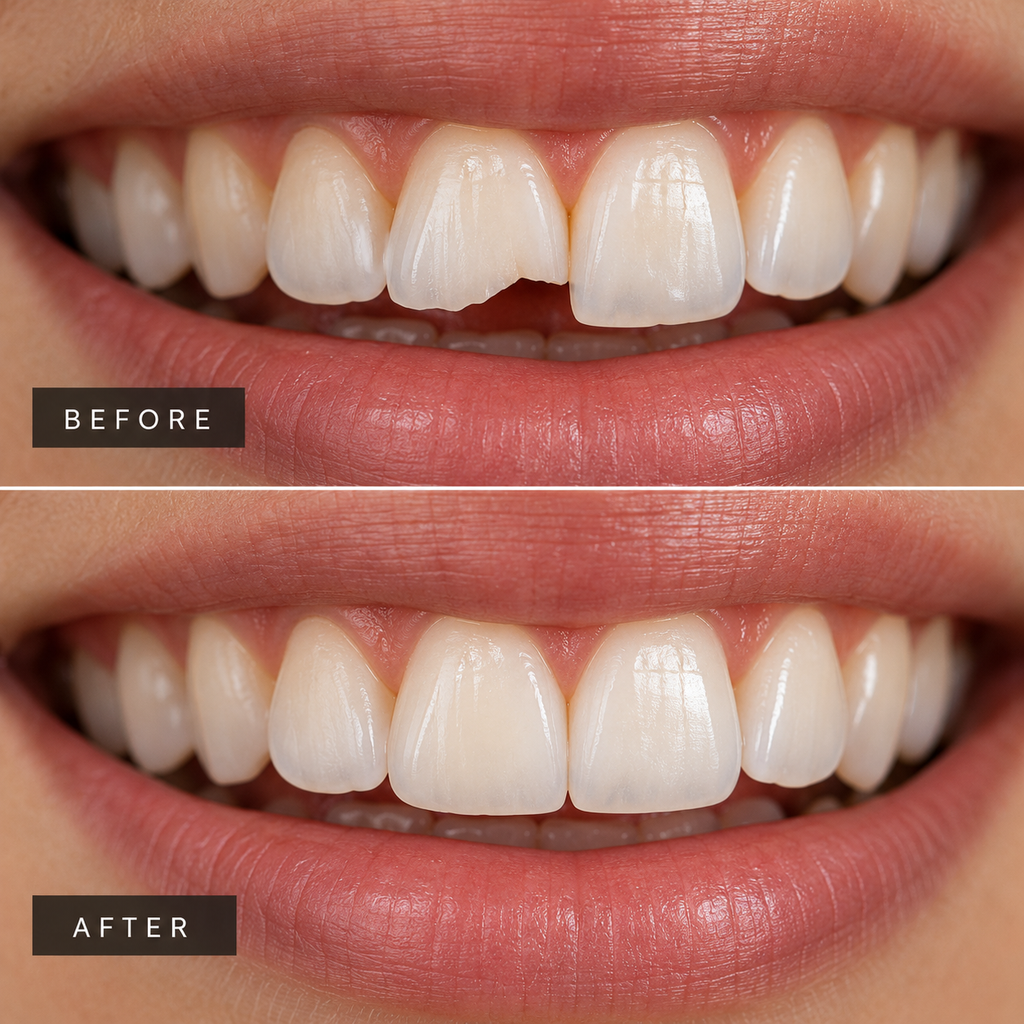
Larger fractures or teeth with significant structural damage may require a different restoration, such as a crown.
2. Small Gaps Between Teeth
Small spaces between certain teeth can sometimes be reduced with composite bonding.
Your dentist adds resin to the sides of the teeth to create a fuller appearance and improve the proportions of your smile. The result depends on the size of the gap, tooth shape, gum health, and bite.
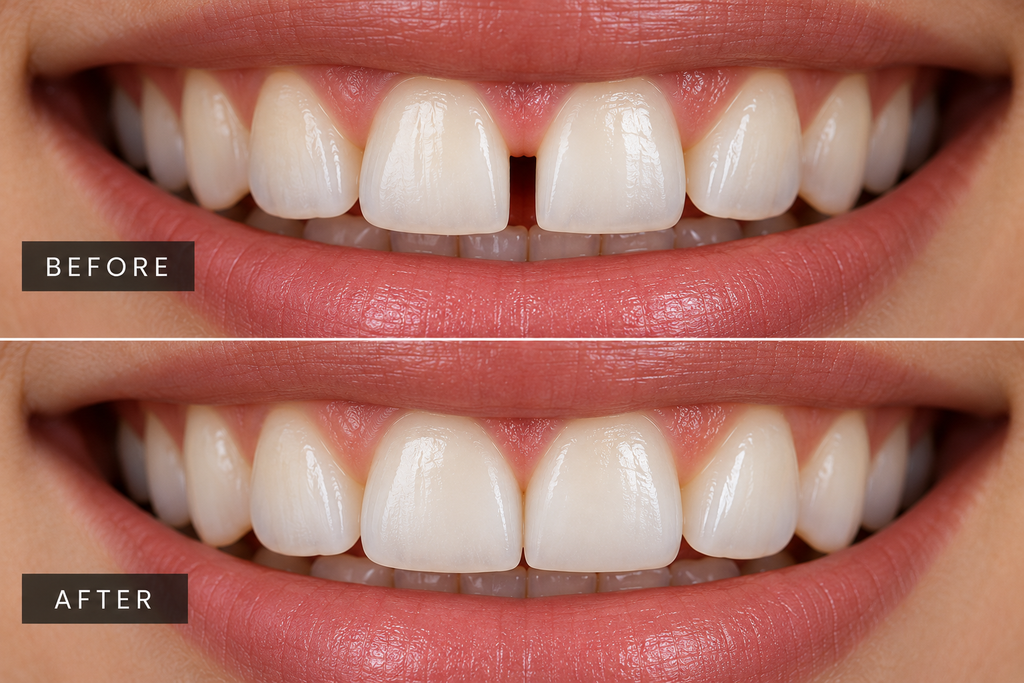
Bonding is not suitable for every gap. Larger spaces or gaps caused by tooth-position problems may be better addressed with orthodontic treatment.
3. Uneven Tooth Edges
Teeth with irregular edges or slightly different lengths can make a smile look uneven.
Composite bonding allows your dentist to reshape selected areas and create a more balanced appearance. This may be helpful when the differences are minor and the teeth are otherwise healthy.
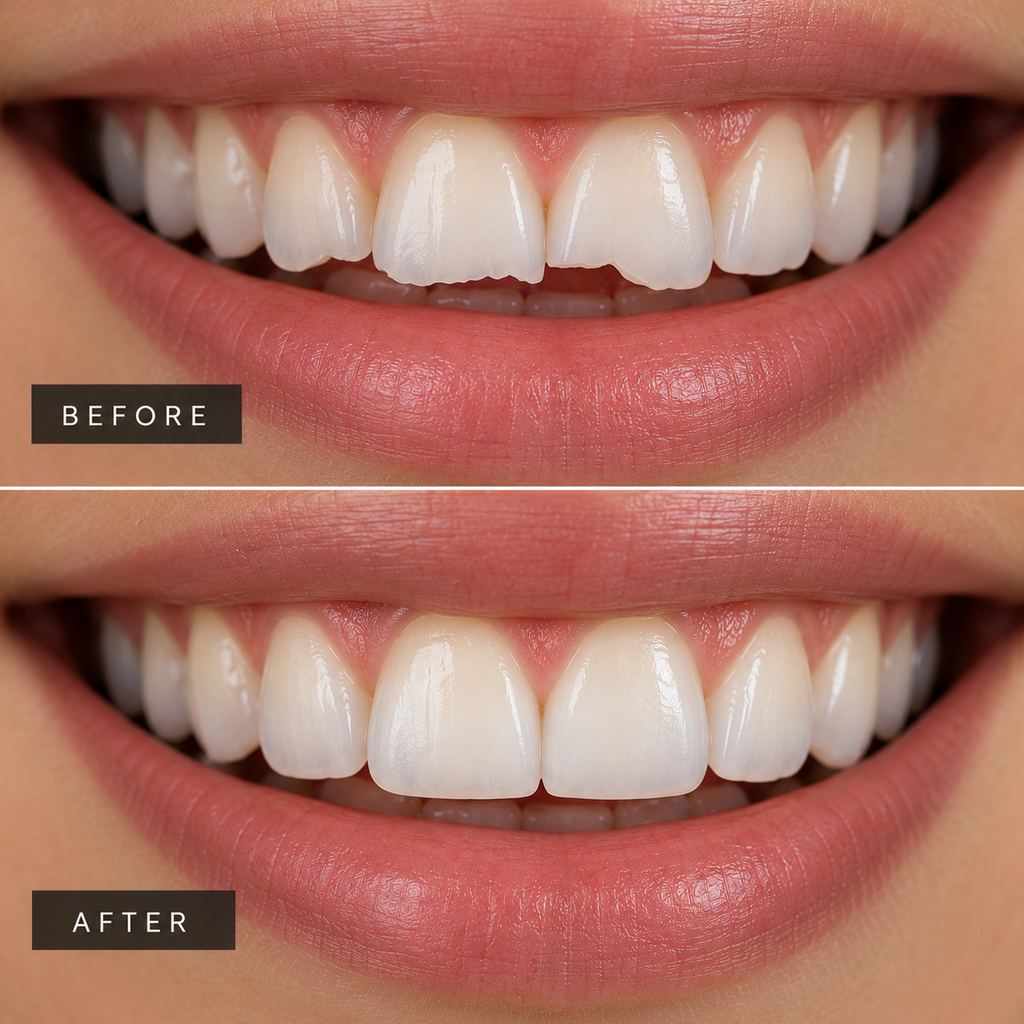
Your dentist will also consider how your upper and lower teeth meet to avoid creating contours that interfere with your bite.
4. Certain Tooth Discoloration
Some localized stains or discolorations may not respond as expected to professional teeth whitening.
In selected cases, composite resin can cover the affected area and improve the tooth’s appearance. However, the cause of the discoloration matters. Internal discoloration, extensive staining, and changes related to tooth damage may require a different treatment approach.
If your main concern is the overall shade of your smile, professional whitening may be worth considering before bonding.
5. Minor Shape Irregularities
Some teeth may appear narrower, shorter, or slightly different in shape from their neighbors.
Composite bonding can sometimes improve these proportions by adding carefully sculpted resin. Your dentist will assess whether the proposed changes will look natural and remain compatible with your bite.
The aim is not necessarily to make every tooth identical. Instead, treatment should complement your natural smile and facial features.
What Are the Benefits of Composite Bonding?
Composite bonding offers several potential advantages for patients who want to make targeted improvements to their smiles.
Composite bonding is one of several options available for improving the appearance of your smile. Depending on your dental needs and goals, other treatments may also be worth considering. Explore the cosmetic dentistry services at Chatham Dental Arts to learn more about available treatments and discuss which approach may be suitable for you.
A Natural-Looking Appearance
Composite resin is available in different shades, allowing your dentist to select a color that blends with your natural teeth.
Careful shaping and polishing also help the bonded area resemble the surrounding enamel. The final appearance depends on shade selection, the condition of the original tooth, the size of the repair, and the dentist’s technique.
A Conservative Treatment Option
Many bonding procedures require minimal alteration of the natural tooth. This can make bonding an appealing option when the goal is to correct a small imperfection without removing substantial healthy tooth structure.
However, not every case is preparation-free. Your dentist will explain what the procedure involves before treatment begins.
Often Completed in One Appointment
Many straightforward composite bonding procedures can be completed in a single dental visit.
The dentist applies the resin directly to the tooth, shapes it, hardens it with a curing light, and polishes the result. More complex cases may require additional planning or appointments.
Targeted Improvements to Your Smile
Composite bonding can address specific concerns without requiring treatment across every visible tooth.
For example, a patient who is happy with their overall smile but wants to repair one small chip may need only a limited area of bonding.
A Versatile Cosmetic Treatment
Depending on the case, composite bonding can improve tooth shape, repair minor chips, reduce small gaps, and cover selected areas of discoloration.
Your dentist can discuss whether bonding alone will meet your goals or whether another cosmetic treatment may provide a more suitable result.
What Happens During a Composite Bonding Procedure?
Understanding the process can help you know what to expect during a cosmetic dental appointment.
Step 1: Dental Examination and Treatment Planning
Your dentist examines the teeth you want to improve and assesses your overall oral health. This may include checking for tooth decay, cracks, gum problems, and bite concerns.
You can explain what you would like to change, whether that involves a chipped edge, a small gap, or an uneven tooth shape.
Your dentist will then discuss whether composite bonding is appropriate and what kind of improvement is realistic.
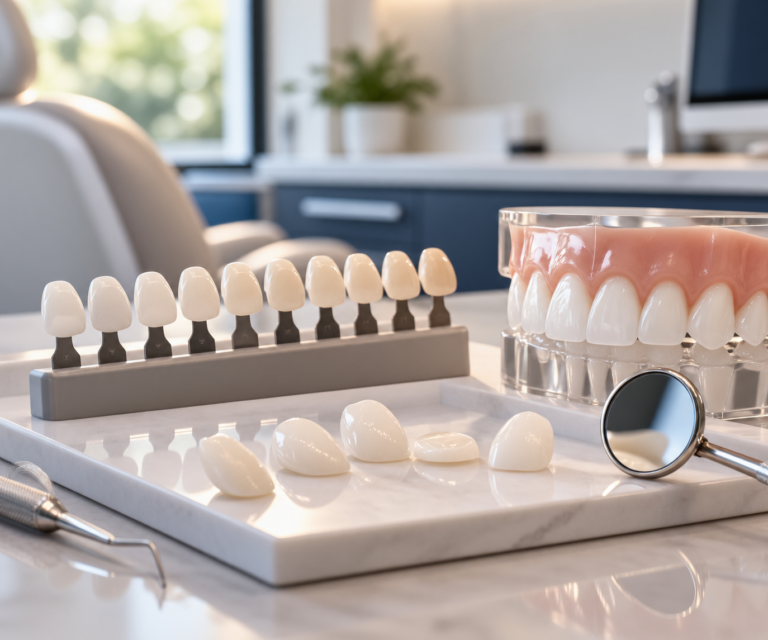
Step 2: Selecting the Resin Shade
The dentist chooses a composite resin shade that complements your natural tooth color.
Shade selection is important because the bonded area should blend with the surrounding enamel rather than stand out.
If you are considering teeth whitening as well, discuss the order of treatment with your dentist. Whitening natural enamel first may help the dentist select a suitable shade for the bonding material.
Step 3: Preparing the Tooth
Depending on the case, your dentist may gently prepare the tooth surface to help the bonding material adhere.
A conditioning solution and bonding agent are typically used as part of the procedure. Anesthesia is not always necessary for straightforward cosmetic bonding, but your needs depend on the tooth and the amount of preparation required.
Step 4: Applying and Shaping the Composite Resin
The dentist applies the tooth-colored resin to the selected area and carefully shapes it.
This stage requires attention to the tooth’s natural contours, proportions, and relationship with neighboring teeth. The dentist works to create a result that complements your smile while allowing normal biting and speaking.
Step 5: Hardening and Polishing
A special curing light hardens the composite resin.
Your dentist then refines the shape, checks the bite, and polishes the surface. These finishing steps help create a smooth appearance and a comfortable fit.
Before you leave, your dentist can explain how to care for the bonded tooth and what changes to watch for.
Does Composite Bonding Hurt?
Composite bonding is generally well tolerated, particularly when the procedure involves a small cosmetic adjustment and little tooth preparation.
Many straightforward cases do not require local anesthesia. However, if the tooth needs more extensive preparation or has an underlying problem, your dentist may recommend anesthesia or another treatment approach.
You may notice some temporary sensitivity afterward, depending on the tooth’s condition and the procedure performed.
If you experience persistent pain, significant sensitivity, or discomfort when biting after bonding, contact your dentist for an evaluation.
How Long Does Composite Bonding Last?
Composite bonding can last several years, but its lifespan varies from person to person.
Factors that influence durability include:
- The size and location of the bonded area.
- The forces placed on the tooth during biting and chewing.
- Habits such as nail-biting or chewing hard objects.
- Teeth grinding or clenching.
- Oral hygiene and regular dental care.
- The condition of the original tooth and the quality of the bonding procedure.
Bonding material can wear down, chip, or become discolored over time. Front teeth may be especially vulnerable if you regularly bite hard foods or use your teeth to open packages.
Regular dental examinations allow your dentist to check the bonded area and identify any changes that may need attention.
How Should You Care for Bonded Teeth?
Composite bonding does not eliminate the need for good oral hygiene. The natural tooth beneath and around the resin can still develop cavities, and the surrounding gums still need regular care.
To help maintain your results, follow these recommendations.
Brush and Floss Daily
Brush twice a day with fluoride toothpaste and clean between your teeth daily. Pay attention to the gumline and the areas surrounding the bonded tooth.
Good oral hygiene helps protect the natural tooth structure and the surrounding gums.
Limit Frequent Exposure to Staining Foods and Drinks
Composite resin can stain over time. Frequent exposure to coffee, tea, red wine, and tobacco can contribute to discoloration.
You do not necessarily need to avoid every food or drink that can stain. Instead, maintain good oral hygiene and discuss any concerns about staining with your dentist.
Avoid Biting Hard Objects
Do not use bonded teeth to bite fingernails, chew ice, open packaging, or break hard objects.
These habits can put excessive pressure on the resin and increase the risk of chipping.
Address Teeth Grinding
If you grind or clench your teeth, tell your dentist. Repeated pressure can damage both natural teeth and bonded restorations.
Depending on your needs, your dentist may recommend a custom nightguard to help protect your teeth.
Keep Up With Dental Visits
Routine dental visits help your dentist monitor the bonded area, check your bite, and evaluate your overall oral health.
If the bonding becomes rough, chips, or feels different when you bite, arrange an appointment rather than trying to repair it yourself.
Composite Bonding vs. Porcelain Veneers: What’s the Difference?
Composite bonding and porcelain veneers can both improve the appearance of teeth, but they differ in material, preparation, and maintenance.
| Feature | Composite Bonding | Porcelain Veneers |
|---|---|---|
| Material | Tooth-colored composite resin | Custom-made dental porcelain |
| Application | Resin is applied and shaped directly on the tooth in typical cases | Thin shells are fabricated and bonded to the front surfaces of teeth |
| Treatment time | Often completed in one appointment for straightforward cases | Usually requires planning and multiple stages |
| Tooth preparation | Often minimal, depending on the case | May require removal of some enamel |
| Stain resistance | More prone to staining over time | Generally more stain-resistant |
| Repairs | Minor chips may be repairable with additional composite | Repairs depend on the type and extent of damage |
| Best suited for | Selected small cosmetic corrections | Selected cases involving broader changes to tooth color, shape, or appearance |
Neither option is automatically better for everyone. Composite bonding may suit patients who want to correct a limited imperfection, while veneers may be more appropriate when several teeth need coordinated cosmetic changes.
Your dentist can help you compare the options based on your goals, oral health, and the amount of natural tooth structure that can be preserved.
For another perspective on planning cosmetic improvements, read Summit Family & Cosmetic Dentistry’s guide to cosmetic dentistry and subtle smile changes.
Is Composite Bonding Right for You?
Composite bonding may be worth considering if you have healthy teeth and want to correct a small cosmetic concern.
You may be a candidate if you want to:
- Repair a minor chip.
- Improve an uneven tooth edge.
- Reduce a small gap between teeth.
- Refine the shape of a tooth.
- Cover certain localized discolorations.
However, bonding may not be the best first step if you have untreated tooth decay, active gum disease, extensive tooth damage, or significant bite problems. These conditions may need attention before cosmetic treatment.
Your expectations also matter. Composite resin does not behave exactly like natural enamel, and the material may require maintenance or replacement over time.
A dental consultation allows you to discuss your priorities and determine whether bonding, veneers, orthodontic treatment, whitening, or another approach is most appropriate.
Improve Your Smile with Composite Bonding at Chatham Dental Arts
You do not always need extensive cosmetic treatment to make a noticeable difference in your smile. For the right patient, composite bonding can offer a conservative way to improve small imperfections while preserving much of the natural tooth structure.
At Chatham Dental Arts in Chatham, NJ, Dr. Blake Bandeff and the dental team can evaluate your teeth, discuss the changes you would like to make, and explain the cosmetic options that may suit your needs.
Whether you want to repair a chipped tooth, refine an uneven edge, or explore ways to improve your smile, start with a conversation about your goals and oral health.
Interested in composite bonding? Contact Chatham Dental Arts to schedule a consultation and learn which cosmetic dentistry options may be right for your smile.
Frequently Asked Questions
Is composite bonding permanent?
Composite bonding is not necessarily permanent. The resin may wear, chip, or discolor over time and may need polishing, repair, or replacement. Its lifespan depends on the size and location of the bonding, your bite, and your oral care habits.
Can composite bonding close gaps between teeth?
Yes, composite bonding can reduce some small gaps by adding tooth-colored resin to the sides of selected teeth. Larger gaps or spaces caused by tooth-position problems may be better treated with orthodontics or another approach.
Does composite bonding look natural?
Composite bonding can look natural when the resin shade, shape, and surface finish complement the surrounding teeth. The result depends on the tooth’s original condition, the size of the correction, and the dentist’s technique.
Can composite bonding be whitened?
Whitening products lighten natural tooth enamel but do not reliably change the color of existing composite resin. If you want a brighter smile, discuss whitening before bonding so your dentist can plan the shade appropriately.
Can bonded teeth develop cavities?
Yes. The natural tooth around or beneath a bonded area can still develop decay. Brushing with fluoride toothpaste, cleaning between your teeth daily, limiting frequent sugar exposure, and attending recommended dental visits remain important.
Is composite bonding better than veneers?
Neither treatment is universally better. Bonding may be suitable for smaller corrections and often requires less alteration of the natural tooth. Veneers may be more appropriate for certain broader cosmetic changes and generally resist staining better. Your dentist can help you compare the options.
Can composite bonding break?
Yes. Composite resin can chip or fracture, particularly when exposed to excessive biting forces or habits such as chewing ice and biting fingernails. A dentist can evaluate the damage and determine whether repair or another restoration is needed.
How do I know whether I need composite bonding or a crown?
Bonding may work for small cosmetic changes or limited damage. A crown may be more appropriate when a tooth needs greater structural coverage and protection. Your dentist will assess the amount of remaining tooth structure, the location of the damage, and your bite before recommending treatment.